
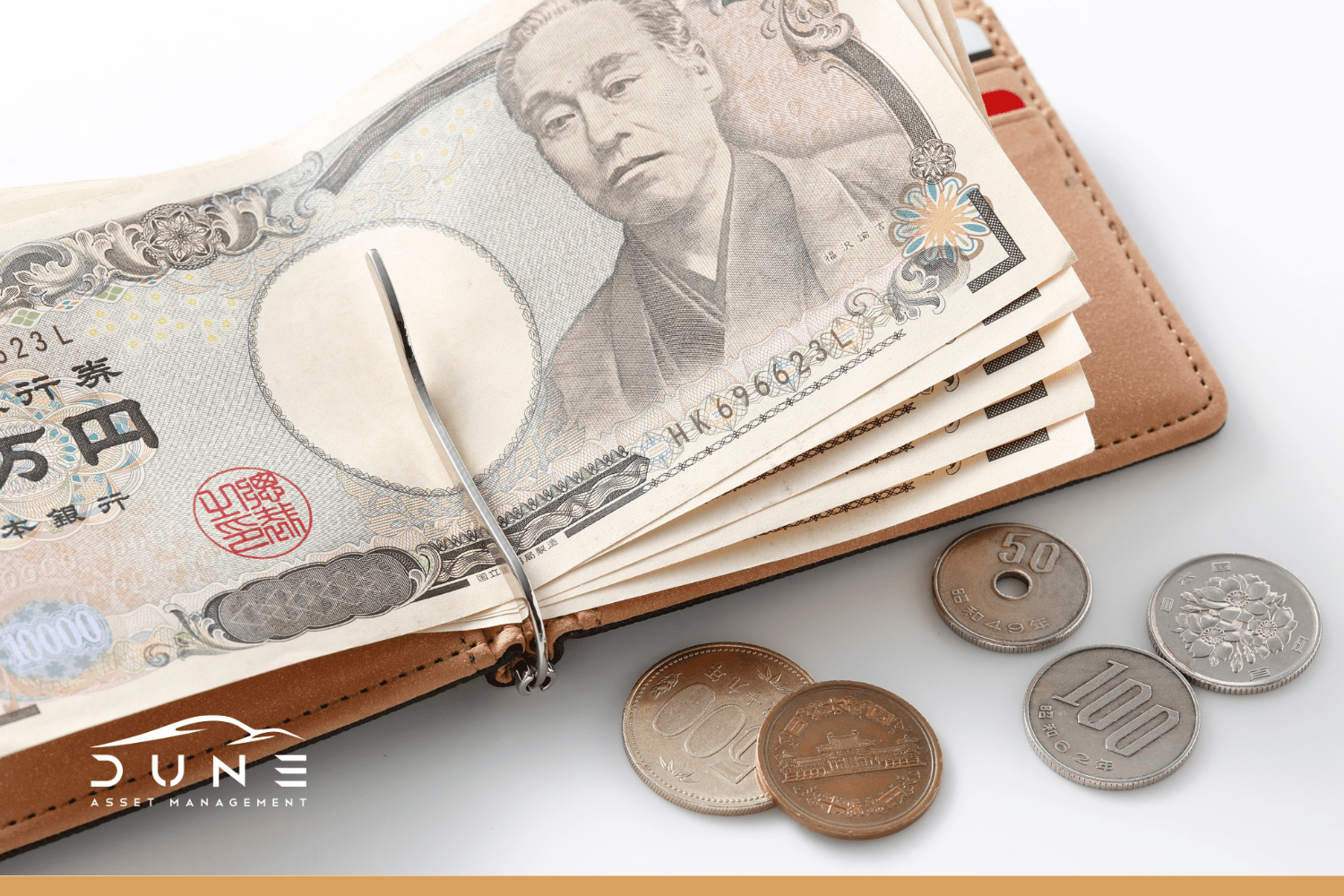
In early August 2026, the United States did something it almost never does.
It joined Japan in buying yen to stop the currency from sliding further. The joint intervention, confirmed by both governments, was the first coordinated US–Japan operation to support the yen in more than a decade and came as the currency hovered near 40‑year lows against the dollar. Officials framed it as a move to counter excessive yen weakness, but the underlying motives were as much about protecting American markets as they were about helping an ally.
For months, the yen had been drifting lower as diverging monetary policies, trade dynamics, and market positioning weighed on the currency. A weak yen makes imports more expensive for Japanese households and businesses, feeding into domestic inflation and cost‑of‑living pressures. At the same time, it makes Japanese exports cheaper on global markets, sharpening competition for US manufacturers. By late July, the yen’s slide had accelerated toward levels that Tokyo and Washington both viewed as destabilising, setting the stage for coordinated action.
What actually happened
On Friday, July 31, the U.S. Treasury intervened in the foreign‑exchange market by purchasing yen, acting in tandem with Japan’s Finance Ministry. Tokyo later confirmed that the operation was a coordinated yen‑buying intervention carried out in lieu of a joint US–Japan finance ministers’ statement from September 2025, which allows for action in the face of excessive volatility and disorderly movements.
President Donald Trump publicly described the move as a gesture of friendship toward Japan and a contribution to global economic stability. At the same time, Treasury Secretary Scott Bessent said the coordinated action was intended to counter disorderly yen movements and endorsed Tokyo’s broader policy steps to correct what Washington sees as a undervalued currency.
Protecting the US Treasury
The most direct US self‑interest lay in the Treasury market itself. Japan is the largest foreign holder of US government debt, with more than $1.2 trillion in U.S. Treasuries as of mid‑2026. When Japan defends the yen unilaterally, it typically needs dollars to buy its own currency, which often means selling some of those Treasuries. A large, forced sale of US bonds would increase supply in the Treasury market, push yields higher, and raise borrowing costs for American households and businesses through higher mortgage rates, auto loans, and corporate credit spreads.
By joining the intervention, Washington reduced the likelihood that Tokyo would need to dump Treasuries to fund a solo defence of the yen. It is a clear case of financial self‑preservation wrapped in alliance solidarity.
Trade Competitiveness
A persistently weak yen also tilts the trade playing field. When the yen is cheap, Japanese exporters gain a price advantage over U.S. rivals, widening the U.S. trade deficit and putting pressure on American manufacturers and jobs. Treasury Secretary Bessent has publicly called the yen “substantially undervalued,” giving Washington a stated policy rationale to act not just on stability grounds but on trade grounds as well. Supporting the yen helps narrow that perceived imbalance and aligns with broader US priorities around protecting domestic industry and managing trade tensions with key partners.
The intervention marks a rare alignment of US and Japanese interests on exchange rates, underpinned by a joint statement that explicitly allows for action in extreme volatility. Publicly, it is a show of alliance strength and a commitment to stable markets. Privately, it is a hedge against higher US rates, export headwinds, and global financial turbulence.
For investors, the episode underscores that even in a world of floating exchange rates, major currencies can still be defended when their moves threaten to spill over into bond markets, trade flows, and systemic stability.