

Where’s The Edge II

Mandelbrot Set

Buying Order In Chaos

Chaos theory is an interdisciplinary area of scientific study and branch of mathematics focused on underlying patterns and deterministic laws of dynamical systems that are highly sensitive to initial conditions, and were once thought to have completely random states of disorder and irregularities. Chaos theory states that within the apparent randomness of chaotic complex systems, there are underlying patterns, interconnection, constant feedback loops, repetition, self-similarity, fractals, and self-organization. - Wikipedia

TIME, Alice In Wonderland

Part I of this series lays the overarching idea of how we approach investing: that the essence of TIME is the fuel that compounds an effective flywheel. And in apparent deductive reasoning, the main goal of any investor then is to find effective flywheels (AKA Great Businesses) in the marketplace. The use of the phrase “flywheel” is not done so loosely, but rather with reverence when it comes to our portfolio construction.

Method To The Madness

In a world of Chaos, as in every complex system like the Market, participants will pay a premium for any semblance of certainty, and that is why businesses with a strong track record of executing usually command a higher multiple (i.e. Microsoft, Apple, etc.). When we juxtapose the idea of a Flywheel against the Chaos of a Market, it is in contrast because a Flywheel is a Closed-Loop system with in-built certainty, whereas the Market is an Open-Loop system with inherent uncertainty; hence, how can we find flywheels in the Market? This is the difference between Investing and Speculating.

Investing vs Speculating

If we want to practice semantics, the act of Investing vs Speculating are two different activities with little crossover; allow me to elaborate. Every investment is an obvious speculation, but with calculated odds and a studied decision, most times, there is a methodology to arriving at a decision; this is your personal flywheel. In contrast, a speculation is a pure punt based on little to no substantiative evidence or decision tree, aka “shooting from the hip”. Given the essence of TIME, this difference produces two very different emergent outcomes. Investing is the attempt to purchase effective flywheels (good businesses), but Speculation does not even consider the concept of a flywheel; speculators embrace the Chaos in the market and, more often than not, get swept away with it over time.
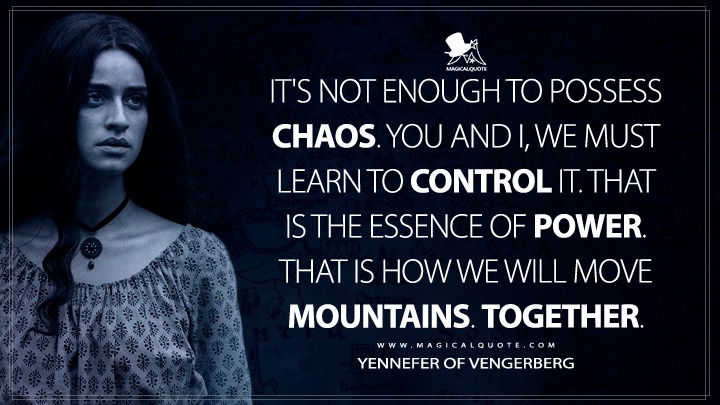
Yennefer Of Vengerberg, The Witcher

Why Are Good Businesses Likened To Effective Flywheels

Good businesses usually run a Closed-Loop decision tree in their industry.

1. Costco – Costco operates an every-day-low-pricing strategy (EDLP) by marking up 14% on branded goods and 15% on private label with the result that prices are very, very low. This is a very simple and honest consumer proposition in the sense that the membership fee buys the customer’s loyalty (and is almost all profit) and Costco in exchange sells goods whilst just covering operating costs. In addition, by sticking to a standard mark-up savings achieved through purchasing or scale are returned to the customer in the form of lower prices, which in turn encourages growth and extends scale advantages. This is retail’s version of perpetual motion and has been widely employed by Wal-Mart among others.

In the case of Costco scale efficiency gains are passed back to the consumer in order to drive further revenue growth. That way customers at one of the first Costco stores (outside Seattle) benefit from the firm’s expansion (into say Ohio) as they also gain from the decline in supplier prices. This keeps the old stores growing too. The point is that having shared the cost savings, the customer reciprocates, with the result that revenues per foot of retailing space at Costco exceed that at the next highest rival (Wal-Mart’s Sam’s Club) by about fifty per cent.

Most companies pursue scale efficiencies, but few share them. It’s the sharing that makes the model so powerful. But in the centre of the model is a paradox: the company grows through giving more back. When companies are asked what they would do with windfall profits, most spend it on something or other, or return the cash to shareholders. Almost no one replies give it back to customers – how would that go down with Wall Street? That is why competing with Costco is so hard to do. The firm is not interested in today’s static assessment of performance. It is managing the business as if to raise the probability of long-term success.

2. Amazon – We have only discussed one flywheel we use to pick good investments, which is called “scale efficiencies shared”, as evidenced by Costco (and to a lesser extent Amazon.com).

The simple deep reality for many firms is the virtuous spiral established when companies keep costs down, margins low and in doing so share their growing scale with their customers. In the long run this will be more important in determining the destination for our firms than the distractions of the day. Jeff Bezos, founder of Amazon, made the following point in an interview with Wired magazine:

“There are two ways to build a successful company. One is to work very, very hard to convince customers to pay high margins [the Colgate, Nike, Coca-Cola model alluded to above]. The other is to work very, very hard to be able to offer customers low margins [the Wal-Mart, Costco, AirAsia, Amazon, Asos model]. They both work. We’re firmly in the second camp. It’s difficult – you have to eliminate defects and be very efficient. But it’s also a point of view. We’d rather have a very large customer base and low margins than a small customer base and higher margins.”

Although Bezos does not mention it, one reason he prefers Amazon to be a large company with small margins is that if he shares the efficiency benefits that come with growth with his customers, he turns size, frequently an anchor on business performance, into an asset. In other words, the moat surrounding the firm deepens as the firm grows.

Costco and Amazon provide evidence that operationally and directionally, they run a clear Closed-Loop decision tree (scale efficiencies shared), and knowing exactly what they are trying to accomplish builds this flywheel of success. How much, then, is this flywheel worth? We all know that economic conditions and market volatility ebb and flow; this is a gift for purchasing economic flywheels, as I will discuss in the next point.

Market Is The Grand Bazaar

Bazaar, Game Of Thrones

Businesses are being bid & offered on the market almost daily. The first heuristic of the bazaar is that not all businesses are flywheels; in fact, most aren’t. The second heuristic is that flywheels come in variations of disguise, as if they are treasures that don’t want to be found. An addendum to the second heuristic is if a flywheel is obvious (i.e., Costco & Amazon), they are usually sold by an unscrupulous merchant demanding too much for that flywheel, making it hard to profit for the new buyer. Most money is made when a trader can identify flywheels in disguise, and these are usually businesses that are in overlooked sectors (i.e. Tobacco, Uranium), sectors that are at the end of their capital cycle (i.e. Offshore Energy, Coal, Oil) or new businesses with a short track record (Spin-Offs). In the same breadth, reasonable profits can also be made from unscrupulous merchants of mature flywheels when market conditions cause them to panic (this is usually the case when these merchants are unaware of what they’re selling) or when liquidity needs arise, and they become forced sellers of these gems. This is made possible by natural or artificial economic forces induced by the Game Masters (i.e. Central Bankers, Wars, Geopolitical Strife). In the grand scheme of things, being cognizant of what we want when we enter the noisy and chaotic bazaar makes us effective traders.
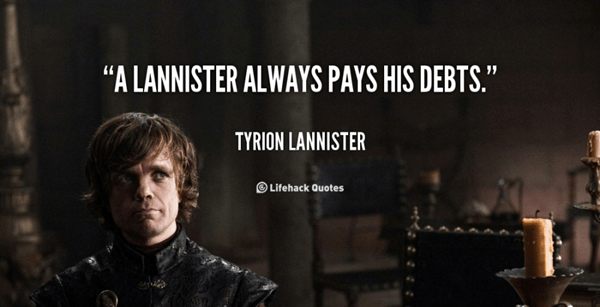
Tyrion Lanister, Game Of Thrones

Game Masters are politicians (i.e. Xi Jinping & US Presidents, etc.), central bankers (i.e. Powell, Yellen and Lagarde, etc.) and these days, rebel groups (Houthis, Ayatollahs etc.) that wield demi-godlike powers which can upset the balance of the market place. It will be too arduous a task to do a deep dive into their individualities, but this section is to point out that there are forces that be that can affect the bazaar, and this is the chaos that we want to embrace once we identify the flywheels that are eyeing. How these forces affect the value of these flywheels, their trajectory and where these forces will subside or arise is the dark wizarding arts of Macro study. A caveat to note is that Macro is not an all-encompassing tool when it comes to its application for us, but rather a crutch that points us where to look for opportunities and how long we should wait for them to arise.

Macro Is The Thread That Loosely Binds

Quote that reads: 'I cant be a wizard. I mean, i'm just harry, just harry'

In what we do, which is the pursuit of acquiring flywheels, a high macro hit rate is not our goal. We yield macro to improve the cost-effectiveness of purchasing these businesses, i.e., if we are eyeing a Technology (Tech companies are long-duration assets that make it especially sensitive to interest rates) company and we think that interest rates will rise because inflation might rear its ugly head again due to the Houthi attacks in the Red Sea, which will cause cost-induced delays and transportation increases; we will hold out on the purchase until our speculated macro assumption materializes or blows over. Stacking this edge on top of what we believe to be a proven model of Capital Allocation is the proverbial icing on the cake that makes our long-term efforts that much sweeter.

Buying Order In Chaos

Chaos theory is an interdisciplinary area of scientific study and branch of mathematics focused on underlying patterns and deterministic laws of dynamical systems that are highly sensitive to initial conditions, and were once thought to have completely random states of disorder and irregularities. Chaos theory states that within the apparent randomness of chaotic complex systems, there are underlying patterns, interconnection, constant feedback loops, repetition, self-similarity, fractals, and self-organization. - Wikipedia

TIME, Alice In Wonderland

Part I of this series lays the overarching idea of how we approach investing: that the essence of TIME is the fuel that compounds an effective flywheel. And in apparent deductive reasoning, the main goal of any investor then is to find effective flywheels (AKA Great Businesses) in the marketplace. The use of the phrase “flywheel” is not done so loosely, but rather with reverence when it comes to our portfolio construction.

Method To The Madness

In a world of Chaos, as in every complex system like the Market, participants will pay a premium for any semblance of certainty, and that is why businesses with a strong track record of executing usually command a higher multiple (i.e. Microsoft, Apple, etc.). When we juxtapose the idea of a Flywheel against the Chaos of a Market, it is in contrast because a Flywheel is a Closed-Loop system with in-built certainty, whereas the Market is an Open-Loop system with inherent uncertainty; hence, how can we find flywheels in the Market? This is the difference between Investing and Speculating.

Investing vs Speculating

If we want to practice semantics, the act of Investing vs Speculating are two different activities with little crossover; allow me to elaborate. Every investment is an obvious speculation, but with calculated odds and a studied decision, most times, there is a methodology to arriving at a decision; this is your personal flywheel. In contrast, a speculation is a pure punt based on little to no substantiative evidence or decision tree, aka “shooting from the hip”. Given the essence of TIME, this difference produces two very different emergent outcomes. Investing is the attempt to purchase effective flywheels (good businesses), but Speculation does not even consider the concept of a flywheel; speculators embrace the Chaos in the market and, more often than not, get swept away with it over time.

Yennefer Of Vengerberg, The Witcher

Why Are Good Businesses Likened To Effective Flywheels

Good businesses usually run a Closed-Loop decision tree in their industry.

1. Costco – Costco operates an every-day-low-pricing strategy (EDLP) by marking up 14% on branded goods and 15% on private label with the result that prices are very, very low. This is a very simple and honest consumer proposition in the sense that the membership fee buys the customer’s loyalty (and is almost all profit) and Costco in exchange sells goods whilst just covering operating costs. In addition, by sticking to a standard mark-up savings achieved through purchasing or scale are returned to the customer in the form of lower prices, which in turn encourages growth and extends scale advantages. This is retail’s version of perpetual motion and has been widely employed by Wal-Mart among others.

In the case of Costco scale efficiency gains are passed back to the consumer in order to drive further revenue growth. That way customers at one of the first Costco stores (outside Seattle) benefit from the firm’s expansion (into say Ohio) as they also gain from the decline in supplier prices. This keeps the old stores growing too. The point is that having shared the cost savings, the customer reciprocates, with the result that revenues per foot of retailing space at Costco exceed that at the next highest rival (Wal-Mart’s Sam’s Club) by about fifty per cent.

Most companies pursue scale efficiencies, but few share them. It’s the sharing that makes the model so powerful. But in the centre of the model is a paradox: the company grows through giving more back. When companies are asked what they would do with windfall profits, most spend it on something or other, or return the cash to shareholders. Almost no one replies give it back to customers – how would that go down with Wall Street? That is why competing with Costco is so hard to do. The firm is not interested in today’s static assessment of performance. It is managing the business as if to raise the probability of long-term success.

2. Amazon – We have only discussed one flywheel we use to pick good investments, which is called “scale efficiencies shared”, as evidenced by Costco (and to a lesser extent Amazon.com).

The simple deep reality for many firms is the virtuous spiral established when companies keep costs down, margins low and in doing so share their growing scale with their customers. In the long run this will be more important in determining the destination for our firms than the distractions of the day. Jeff Bezos, founder of Amazon, made the following point in an interview with Wired magazine:

“There are two ways to build a successful company. One is to work very, very hard to convince customers to pay high margins [the Colgate, Nike, Coca-Cola model alluded to above]. The other is to work very, very hard to be able to offer customers low margins [the Wal-Mart, Costco, AirAsia, Amazon, Asos model]. They both work. We’re firmly in the second camp. It’s difficult – you have to eliminate defects and be very efficient. But it’s also a point of view. We’d rather have a very large customer base and low margins than a small customer base and higher margins.”

Although Bezos does not mention it, one reason he prefers Amazon to be a large company with small margins is that if he shares the efficiency benefits that come with growth with his customers, he turns size, frequently an anchor on business performance, into an asset. In other words, the moat surrounding the firm deepens as the firm grows.

Costco and Amazon provide evidence that operationally and directionally, they run a clear Closed-Loop decision tree (scale efficiencies shared), and knowing exactly what they are trying to accomplish builds this flywheel of success. How much, then, is this flywheel worth? We all know that economic conditions and market volatility ebb and flow; this is a gift for purchasing economic flywheels, as I will discuss in the next point.

Market Is The Grand Bazaar

Bazaar, Game Of Thrones

Businesses are being bid & offered on the market almost daily. The first heuristic of the bazaar is that not all businesses are flywheels; in fact, most aren’t. The second heuristic is that flywheels come in variations of disguise, as if they are treasures that don’t want to be found. An addendum to the second heuristic is if a flywheel is obvious (i.e., Costco & Amazon), they are usually sold by an unscrupulous merchant demanding too much for that flywheel, making it hard to profit for the new buyer. Most money is made when a trader can identify flywheels in disguise, and these are usually businesses that are in overlooked sectors (i.e. Tobacco, Uranium), sectors that are at the end of their capital cycle (i.e. Offshore Energy, Coal, Oil) or new businesses with a short track record (Spin-Offs). In the same breadth, reasonable profits can also be made from unscrupulous merchants of mature flywheels when market conditions cause them to panic (this is usually the case when these merchants are unaware of what they’re selling) or when liquidity needs arise, and they become forced sellers of these gems. This is made possible by natural or artificial economic forces induced by the Game Masters (i.e. Central Bankers, Wars, Geopolitical Strife). In the grand scheme of things, being cognizant of what we want when we enter the noisy and chaotic bazaar makes us effective traders.

Tyrion Lanister, Game Of Thrones

Game Masters are politicians (i.e. Xi Jinping & US Presidents, etc.), central bankers (i.e. Powell, Yellen and Lagarde, etc.) and these days, rebel groups (Houthis, Ayatollahs etc.) that wield demi-godlike powers which can upset the balance of the market place. It will be too arduous a task to do a deep dive into their individualities, but this section is to point out that there are forces that be that can affect the bazaar, and this is the chaos that we want to embrace once we identify the flywheels that are eyeing. How these forces affect the value of these flywheels, their trajectory and where these forces will subside or arise is the dark wizarding arts of Macro study. A caveat to note is that Macro is not an all-encompassing tool when it comes to its application for us, but rather a crutch that points us where to look for opportunities and how long we should wait for them to arise.

Macro Is The Thread That Loosely Binds

Quote that reads: 'I cant be a wizard. I mean, i'm just harry, just harry'

In what we do, which is the pursuit of acquiring flywheels, a high macro hit rate is not our goal. We yield macro to improve the cost-effectiveness of purchasing these businesses, i.e., if we are eyeing a Technology (Tech companies are long-duration assets that make it especially sensitive to interest rates) company and we think that interest rates will rise because inflation might rear its ugly head again due to the Houthi attacks in the Red Sea, which will cause cost-induced delays and transportation increases; we will hold out on the purchase until our speculated macro assumption materializes or blows over. Stacking this edge on top of what we believe to be a proven model of Capital Allocation is the proverbial icing on the cake that makes our long-term efforts that much sweeter.