
The Natural Edge Of Time
In his essay “Of Bamboos, Cicadas and the Economy of Adam Smith”, the scientist Stephen Jay Gould tells the story of a species of bamboo, Phyllostachus bambusoides that flowers and sets seed once every 120 years, a remarkable length of time. Even more remarkable is that all plants of the species do this simultaneously, so wherever in the world they are, they wait 120 years and then all flower in the same year. This combination of infrequency and synchroneity can be understood as “predator satiation” – the long time interval between flowering means it occurs at most once during the life cycle of its predators, and the synchronous setting of seed increases the likelihood that at least some representatives of the species will survive. The bamboo’s strategy is taken a step further by certain members of the insect order Homoptera in the eastern half of the United States, known as periodic cicadas. These live underground as nymphs for 17 years (or 13 years in the case of some species), and then in the space of a few weeks, they all emerge from the ground, become adult cicadas, mate, lay their eggs, and die. Gould points out that these cicada cycles are prime numbers, non-divisible by any other integer except 1, which minimises the coincidence of the cicadas’ life cycle with that of any predator.
The Formula For Finding 100 Baggers:
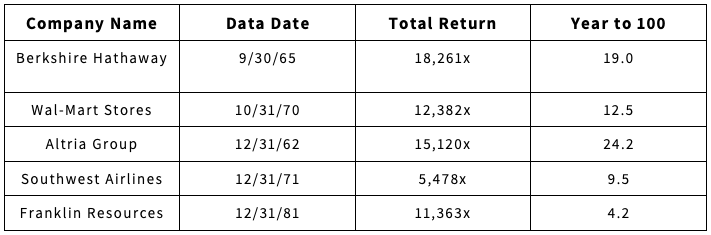
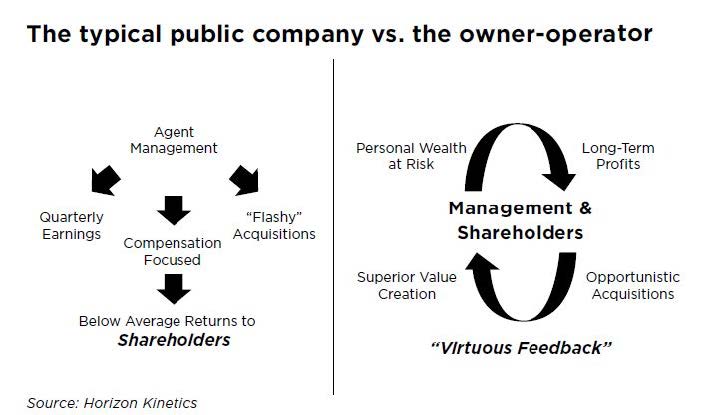
Great Management At Fair Price (Owner-Operator) x Time = 100 Baggers
There is a great dichotomy in the investing world between patience and impatience; which virtue yields the most gains? Across this spectrum lies the array of funds from high time preference (Citadel, Virtu, Jump Trading) to low time preference (Berkshire Hathaway, Baupost Group, Akre Capital) and everything in between (Point72, Balyasny, Millennium Management). Baupost what, and Akre who? In a world of high-touch information and dopamine-activating curated feeds to individuals, instant gratification is the name of the game, and this is the obvious corollary to why most people are only attracted to investments with the promise of prompt gains and by association, why only the investment firms in the high to mid-time preference is recognisable. Our live-for-today culture has been invaded, like a deadly virus, by an insidious attitude that teaches this moment is all that matters just because it is all we see and experience—right now. The symptoms of this affliction can be found in the chronically low savings rate in our culture (ranging from financial to even fresh water, soil, and, of course, forests) and, analogously and most incredibly, governmental fiscal deficits that deviously and increasingly rob future generations—our helpless intergenerational forward selves.
As a result of fried dopamine, firms with a “forever” time frame get detoxed from most people’s watchlists and investment emulation styles even though it’s the only time preference individuals and most boutique investment firms will ever have an edge in.
To put things in perspective, firms in the high-time preference quadrant spend 100’s of millions on infrastructure like microwave towers and atomic clocks in space to ensure speed and synchronisation and firms in the mid-time preference quadrant spend equal amounts on specialised groups of trading pods to industrialise alpha across every tradable product. Care to compete? I can see why these kinds of firms raise the most money; it’s because everyone is swimming in the same pond of short-termism, and where there’s money, there’s industry; nothing wrong with that. In addition, these firms also add great service to ensure efficient market pricing and proper flow of liquidity, but this void has been filled, and it’s crowded. Kudos to the incumbents. This is not to say that it’s impossible to harvest alpha like that, but it is likely improbable for most people over the long run. Investing is a marathon, and real alpha is not just risk-adjusted returns but risk+time (quality of life) adjusted.
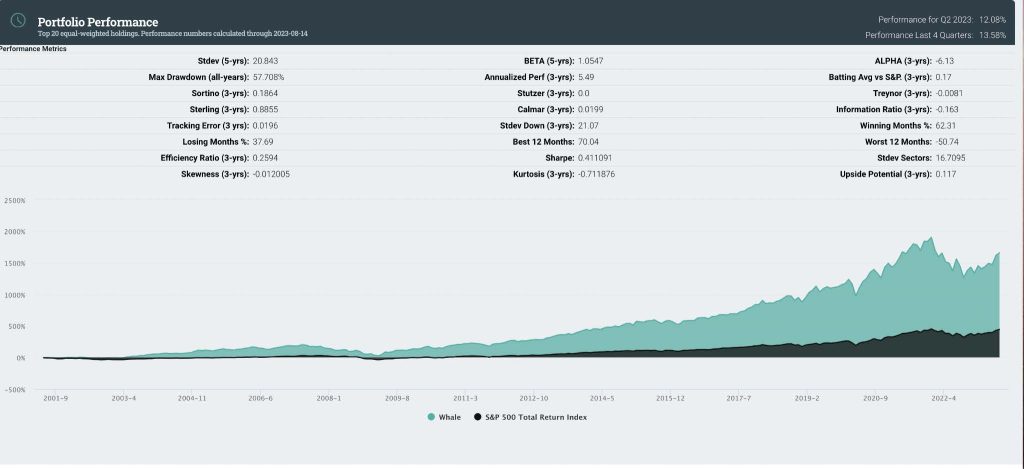
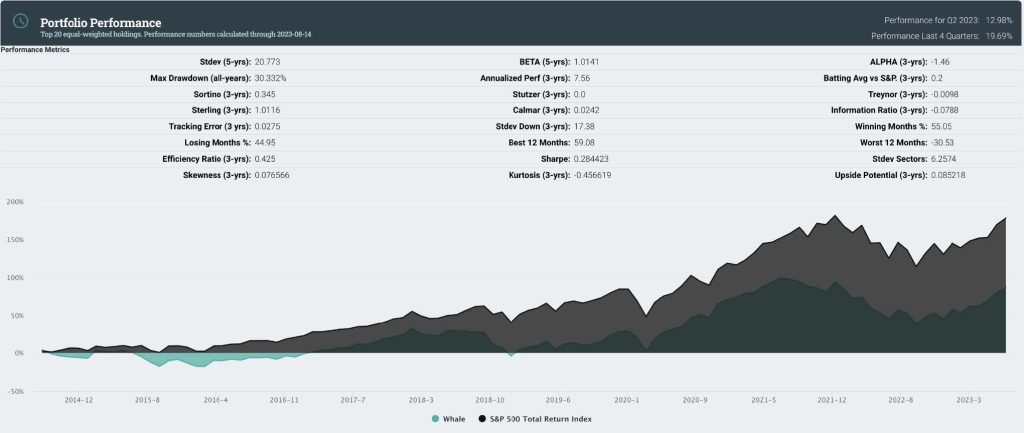
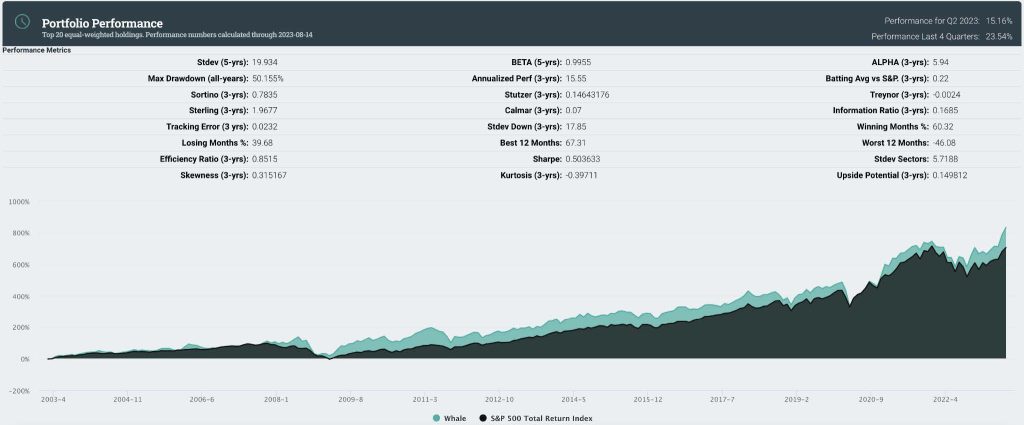
In reality, the most important input for any investor is Great Management At A Fair Price x Time; this qualitative aspect is too “old school” and antiquated to fit the glitz and glamour narrative of the hedge fund world. Let’s see how funds that followed this simple qualitative formula performed (Whale = the cited fund above each chart).
Low-Time Preference Funds
Berkshire Hathaway
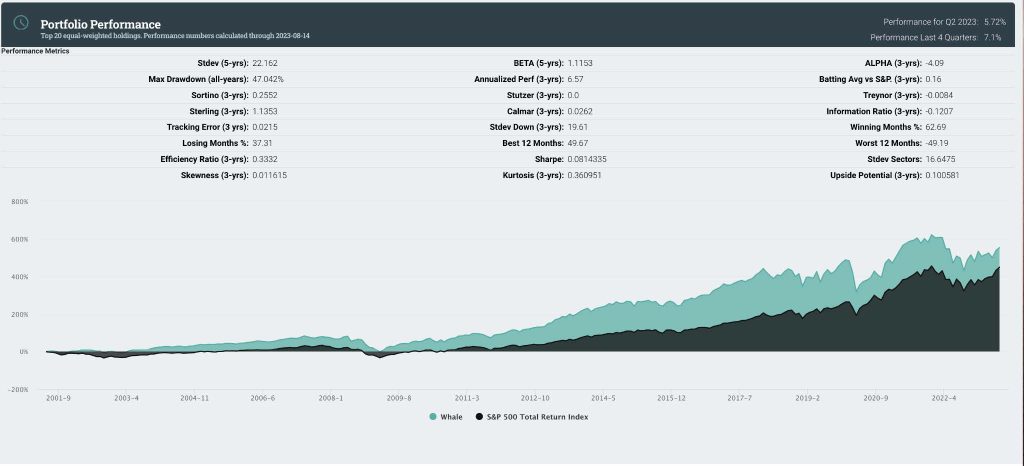
Baupost Group
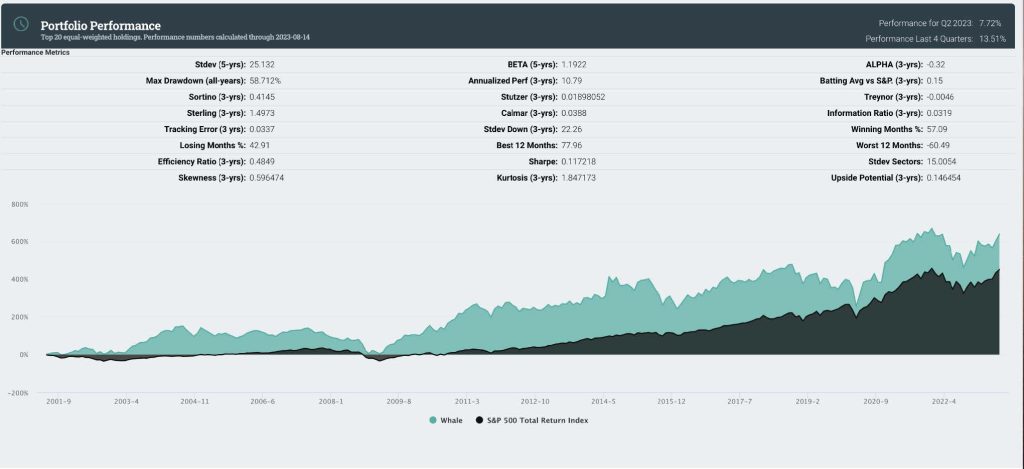
Akre Capital
In Comparison:
Mid-Time Preference Funds
Point 72
Balyasny
High-Time Preference Funds
Citadel
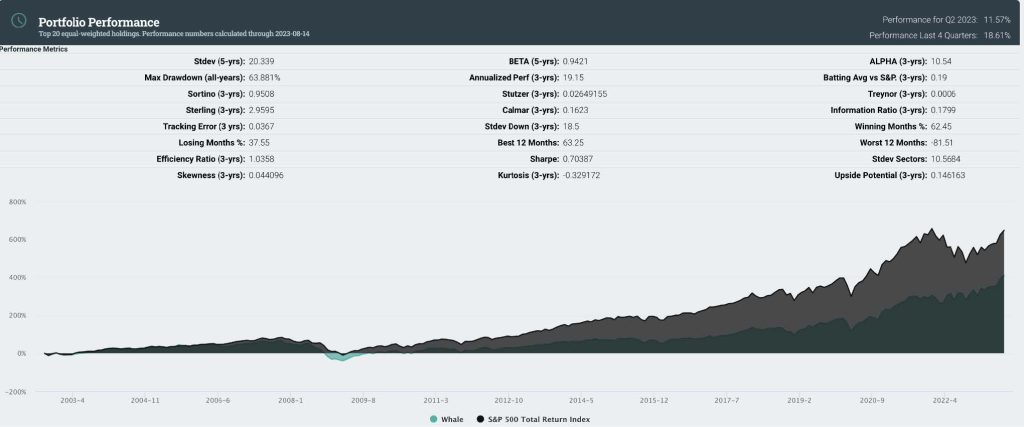
The juxtaposition of performance is clear; there may be a case to be made for nit-picking, but to be fair, these funds are the best-in-class asset managers in their respective fields. Millennium Management, Virtu and Jump’s performance data could not be found in my fund database. Time compounds good and bad decisions, and this cumulative effort is not linear but convex. This convexity is where the true power lies because, if managed properly, it will eventually lead to asymmetric outcomes for investors. Fathom this equation: 1. Good Decision + Time = Cumulative build-up that leads to an Inflexion Point. 2. Inflexion Point = Convexity due to critical mass; we call this a state of maximum entropy in thermodynamics. 3. Beyond this Inflexion point is where the magic that leads to Asymmetry lurks. The underlying basis for all these to happen is to allow time to compound our efforts. In contrast, funds with high to mid-time preference sacrifice convexity due to critical mass for linear repetitive actions that aim to compound the base capital over time. This is a high-effort endeavour due to shorter cycles, but it may also mean more sterile alpha-harvesting, as luck plays a smaller role in a high-touch environment.
In Alice in Wonderland, one had to run fast in order to stand still. In the stock market, the evidence suggests one who buys right must stand still in order to run fast.
An Extreme Cofee-Can Portfolio Example:
There is a portfolio that makes the coffee-can portfolio look impatient: the Voya Corporate Leaders Trust Fund. It was the subject of a story written by Reuters by Ross Kerber. The headline was “Buy-and-Hold Fund Prospers with No New Bets in 80 Years”.
Here’s Kerber: “The Voya Corporate Leaders Trust Fund, now run by a unit of Voya Financial Inc bought equal amounts of stock in 30 major US corporations in 1935 and hasn’t picked a new stock since.”
Remarkably, the fund has beaten 98% of its peers over the last five and ten-year periods. Over the five-year period ended Feb.23 [2015], the fund returned an average of 17.32% annually, including fees. In fact, it’s beaten the S&P 500 for 40 years.
The Natural Edge Of Time is an op-ed written to impress upon and impress readers that the roundabout way (bidding ones time) to investing is usually the most sustainable. In retrospect, this draws parallels to the natural evolution of things, just like the Bamboos and Cicadas, to ensure the survival and flourishing of its species. As Mark Spitznagel in The Dao Of Capital eloquently puts it, “Because of the quirks of our human eagerness for the immediate reward, we are forewarned that what seems easy and straightforward is deceptively so; the roundabout is in practice a counterintuitive path—of acquiring later stage advantage through an earlier stage disadvantage—nearly impossible to follow.”
100 Baggers and Beyond (Examples):