Macro Reorientation

This week’s thoughts are still very much predicated on the principle of 無為 that we lay out in our latest musings. Much has occurred since our last dispatch, Silicon Valley Bank imploded, Signature Bank was taken to the backyard to be shot (shutting down the last institutional Fiat<>Crypto on-ramp, off-ramp), Credit Suisse nearly imploded, and the US government inadvertently created a two-tiered banking system when they introduced FDIC rules that favour G-SIBs (Globally Systemic Banks) over mid-smaller sized banks, leading to an ongoing regional bank crisis as depositors will prefer to bank with banks that have the backing of the federal government. To me, the forward path of interest rates is less clear than the forward path of liquidity. There’s nothing outright stopping the Fed from gradually raising interest rates at the moment, or holding them where they are. However, the Fed’s quantitative tightening will be hard to keep doing without a corresponding increase in the usage of their new BTFP liquidity facility.

In other words, while they have some flexibility around interest rates, I don’t think they have much flexibility to bring bank reserves much lower, if at all. Their quantitative tightening rapidly pulled liquidity out of banks, and for small banks (but not yet large banks) that liquidity is back down to levels not seen since the 2019 repo spike, which ended the Fed’s prior period of quantitative tightening.
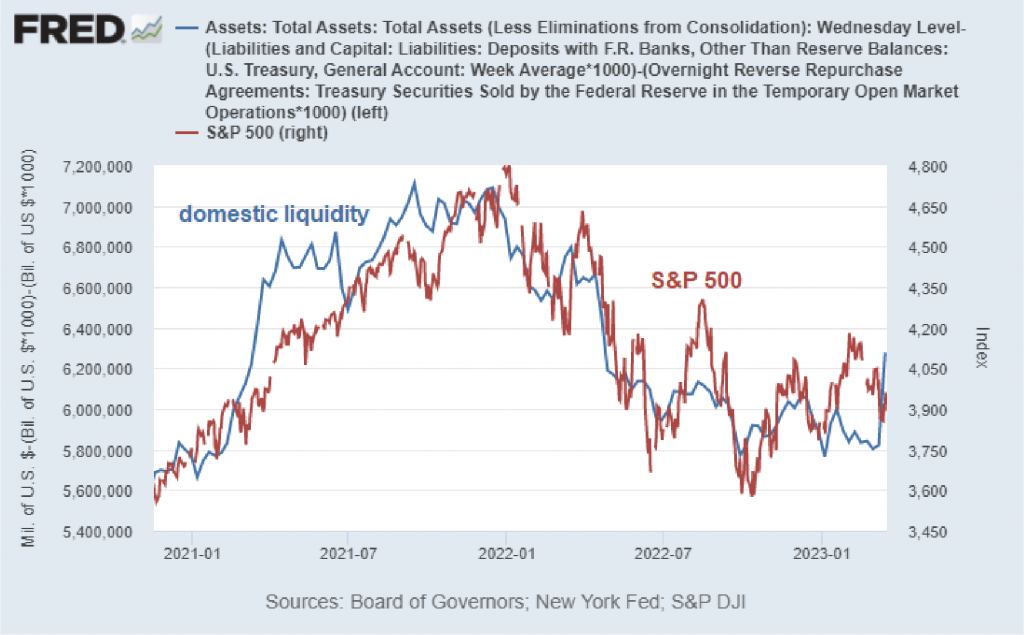
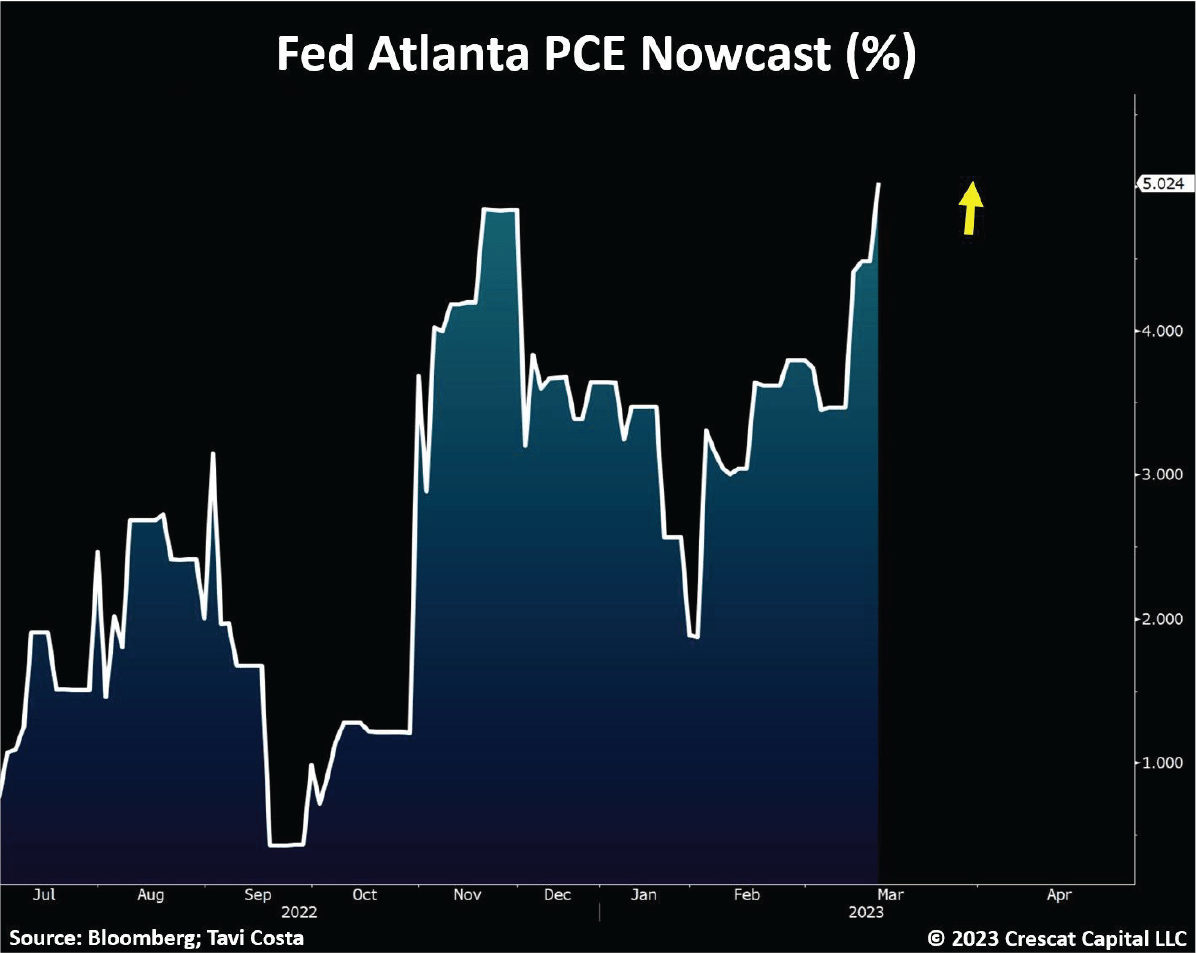
What’s telling is the Fed’s reaction towards these events, we have been postulating that Powell is no Volcker, but to be fair, he inherited (> 130% Debt/GDP) a very different US economy as Volcker (60%-70% Debt/GDP). In order to backstop the banks, the Fed injected a large amount of liquidity into the system that unwound a large part of their balance sheet reduction efforts (chart above). This comes at a very precarious time as inflation data is not abating, with the PCE index (Fed’s preferred inflationary measure) hitting all-time highs concurrently (as shown below).
3

This is some serious Catch-22 situation, and it seems the Fed is left with two choices:

  1. Raise rates and cause further financial stress. This is a very hard read-through because the effect of rate hikes may just be showing up when inflation remains sticky due to past fiscal measures.
  2. Reverse rate hike policy and see inflation come roaring back in the second half of the year. This will be a classic Emerging Market outcome, but does the Fed have a choice? Not really; it seems there’s a better chance of betting on a disinflationary impulse due to Chat-GPT4.

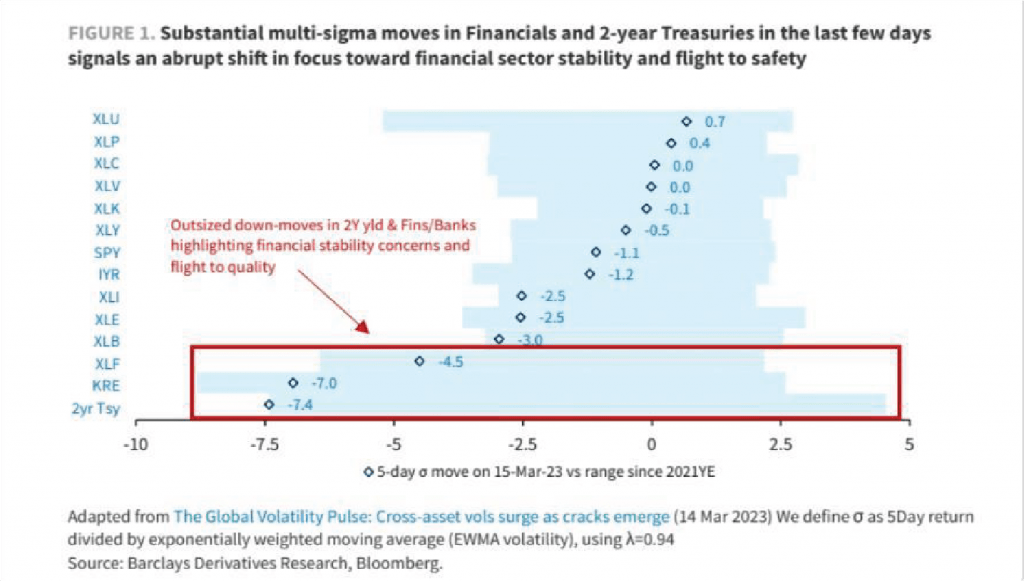
For a while, since the SVB debacle, we held the stance that the government’s response towards the situation was very surgical (extending a credit line that allows banks to convert USTs to cash at Par —> this is a stealth Yield Curve Control and will be inflationary in the long run). The measures were explicitly targeted at shoring up the banking sector and led us to believe that with a stop-gap, the Fed will have room to raise rates without causing more banking stress. In addition, the Fed and Treasury’s actions were also probably about preventing a fourth episode of UST market dysfunction in the past three years (prior three episodes = Sep-19, Mar-20, Oct-22), banks (one of the biggest marginal buyers of USTs since 2014) aggressively sold USTs to raise USDs to fund deposit outflows. In the days that ensued, stresses started showing up in Credit Suisse and judging from the way Commercial Real Estate (CRE) have been selling off; we would be remiss not to acknowledge that there is a possibility of a near-term peak in yields (Wells Fargo has a sizeable Real-Estate book). The smoking gun appears to be Gold and Bitcoin with their outperformance; it’s as if people are voting out of the system into the hard-money standard. The chart below depicts the outsized armageddon style move in rate-sensitive sectors (Financials & Commercial Real Estate).
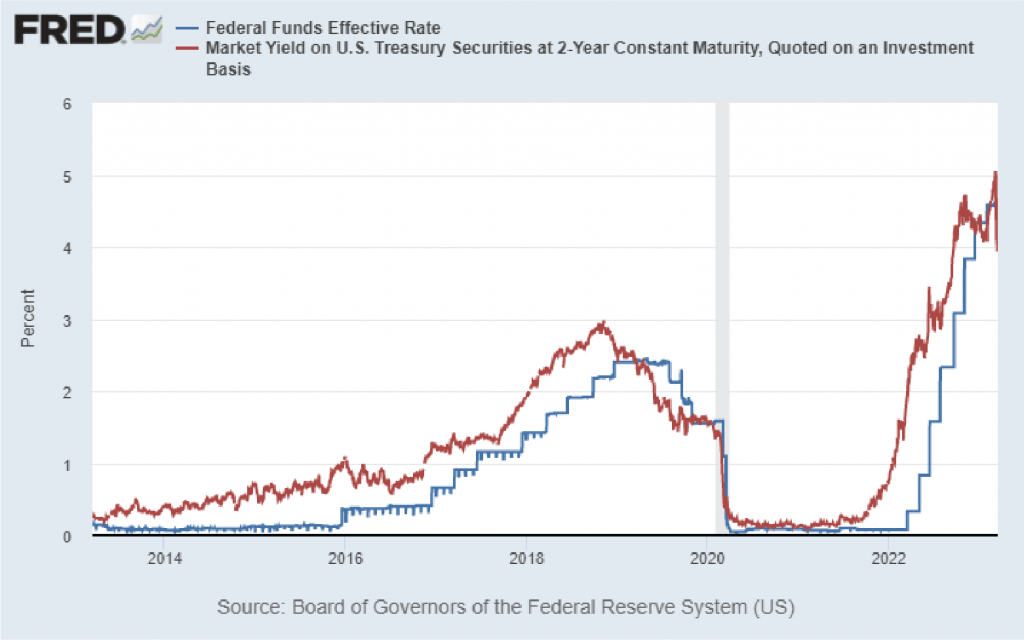
The Treasury market is now pricing in the idea that the Federal Reserve is nearly done raising rates. Specifically, the 2-year Treasury yield had its biggest 1-day move since 1987. It firmly plunged below the Federal Reserve’s key interest rate:
Buy when there’s blood on the streets. Buffet’s famous axiom is much easier to envision than actually doing it when you’re in the trenches. Would you go out and buy banks or commercial real estate now? Despite his age, Buffet still has a solid pair, and speculation is rife that he is working with the Biden administration to structure something for the regional banks. One thing we should admire about the man is that he eats his own cooking. This is not to ask your average Joe to go out and punt on these assets but to impress upon you that the doomsday narrative pendulum has swung so far that some babies are being thrown out together with the bathwater. We’ve exited an uncertain market regime, and entered another uncertain market regime, but one with different characteristics. The Fed balance sheet is likely to trend sideways-ish for months, unless or until some big catalyst forces it higher. They don’t want to flood the system with liquidity but they want to keep the wheels from falling off.

This week’s thoughts are still very much predicated on the principle of 無為 that we lay out in our latest musings. Much has occurred since our last dispatch, Silicon Valley Bank imploded, Signature Bank was taken to the backyard to be shot (shutting down the last institutional Fiat<>Crypto on-ramp, off-ramp), Credit Suisse nearly imploded, and the US government inadvertently created a two-tiered banking system when they introduced FDIC rules that favour G-SIBs (Globally Systemic Banks) over mid-smaller sized banks, leading to an ongoing regional bank crisis as depositors will prefer to bank with banks that have the backing of the federal government. To me, the forward path of interest rates is less clear than the forward path of liquidity. There’s nothing outright stopping the Fed from gradually raising interest rates at the moment, or holding them where they are. However, the Fed’s quantitative tightening will be hard to keep doing without a corresponding increase in the usage of their new BTFP liquidity facility.

In other words, while they have some flexibility around interest rates, I don’t think they have much flexibility to bring bank reserves much lower, if at all. Their quantitative tightening rapidly pulled liquidity out of banks, and for small banks (but not yet large banks) that liquidity is back down to levels not seen since the 2019 repo spike, which ended the Fed’s prior period of quantitative tightening.

What’s telling is the Fed’s reaction towards these events, we have been postulating that Powell is no Volcker, but to be fair, he inherited (> 130% Debt/GDP) a very different US economy as Volcker (60%-70% Debt/GDP). In order to backstop the banks, the Fed injected a large amount of liquidity into the system that unwound a large part of their balance sheet reduction efforts (chart above). This comes at a very precarious time as inflation data is not abating, with the PCE index (Fed’s preferred inflationary measure) hitting all-time highs concurrently (as shown below).

3

This is some serious Catch-22 situation, and it seems the Fed is left with two choices:

  1. Raise rates and cause further financial stress. This is a very hard read-through because the effect of rate hikes may just be showing up when inflation remains sticky due to past fiscal measures.
  2. Reverse rate hike policy and see inflation come roaring back in the second half of the year. This will be a classic Emerging Market outcome, but does the Fed have a choice? Not really; it seems there’s a better chance of betting on a disinflationary impulse due to Chat-GPT4.

For a while, since the SVB debacle, we held the stance that the government’s response towards the situation was very surgical (extending a credit line that allows banks to convert USTs to cash at Par —> this is a stealth Yield Curve Control and will be inflationary in the long run). The measures were explicitly targeted at shoring up the banking sector and led us to believe that with a stop-gap, the Fed will have room to raise rates without causing more banking stress. In addition, the Fed and Treasury’s actions were also probably about preventing a fourth episode of UST market dysfunction in the past three years (prior three episodes = Sep-19, Mar-20, Oct-22), banks (one of the biggest marginal buyers of USTs since 2014) aggressively sold USTs to raise USDs to fund deposit outflows. In the days that ensued, stresses started showing up in Credit Suisse and judging from the way Commercial Real Estate (CRE) have been selling off; we would be remiss not to acknowledge that there is a possibility of a near-term peak in yields (Wells Fargo has a sizeable Real-Estate book). The smoking gun appears to be Gold and Bitcoin with their outperformance; it’s as if people are voting out of the system into the hard-money standard. The chart below depicts the outsized armageddon style move in rate-sensitive sectors (Financials & Commercial Real Estate).

The Treasury market is now pricing in the idea that the Federal Reserve is nearly done raising rates. Specifically, the 2-year Treasury yield had its biggest 1-day move since 1987. It firmly plunged below the Federal Reserve’s key interest rate:

Buy when there’s blood on the streets. Buffet’s famous axiom is much easier to envision than actually doing it when you’re in the trenches. Would you go out and buy banks or commercial real estate now? Despite his age, Buffet still has a solid pair, and speculation is rife that he is working with the Biden administration to structure something for the regional banks. One thing we should admire about the man is that he eats his own cooking. This is not to ask your average Joe to go out and punt on these assets but to impress upon you that the doomsday narrative pendulum has swung so far that some babies are being thrown out together with the bathwater. We’ve exited an uncertain market regime, and entered another uncertain market regime, but one with different characteristics. The Fed balance sheet is likely to trend sideways-ish for months, unless or until some big catalyst forces it higher. They don’t want to flood the system with liquidity but they want to keep the wheels from falling off.