Hunker Down & STFR (Sell The F…… RIP)

(5-minute read)  | 

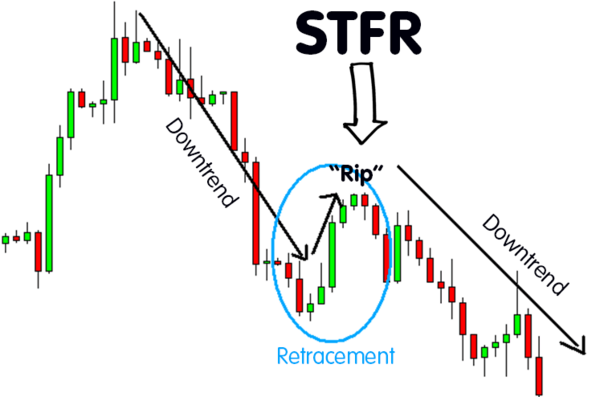
This market environment has been arguably one of the most challenging macro environments experienced in decades or even the century. There’s no doubt more pain lays ahead where bulls and bears will get slaughtered. What does a bear market really mean for your goals and dreams? Is it a signal to sell or buy? The uncertainty and the weight of not knowing what to expect is very often too much for many investors to bear. It is very common to want to sell and exit all of your investments when things look scary, and to come back in when you feel that the coast is clear (just like the diagram below). However, that would definitely not be the best course of action.

The myriad and confluence of factors make these trading and investing environment one for the history book:

  • Record Debt Levels comparable to Post World War 2 era where the war effort racked up Debt/GDP of more than 100%>. Such a debt level causes a nation’s economic conditions to be highly susceptible to interest rate fluctuations. 
  •  Inflationary forces reminiscent of that which started in the 60s and carried over to the 70s (massive tax cuts proposed by Kennedy in 1962 and signed into law by Lyndon Baines Johnson after Kennedy’s death succeeded in stimulating demand, creating growth in the economy. While Johnson avowed to create a Great Society and eliminate poverty in America, the most important item in the federal budget was not the war on poverty; it was the war in Vietnam. Because Vietnam was unpopular, he wanted a silent, invisible war and so, and therefore, he did not want to raise taxes. He tried to have domestic programs, and he wanted to be able to run the war as well, setting the stage for the surge of inflation). Similarly, our War on Covid is the spark that triggers the inflation infernal if we look back.
  • Deglobalization as countries lose trust and form economic factions akin to the era post World War 1. Borders create trading friction and the end of Just-In-Time inventory management, allowing companies to focus on capital efficiency. These factors are inflationary for goods and services. 
  • Rising Energy and Food prices that was the cause of the Arab Spring (Beginning in December 2010, anti-government protests rocked Tunisia. By early 2011 they had spread into what became known as the Arab Spring—a wave of protests, uprisings, and unrest that spread across Arabic-speaking countries in North Africa and the Middle East. pro-democratic demonstrations, which spread rapidly due to social media, ended up toppling the governments of Tunisia, Egypt, Libya, and Yemen) and many revolutions in history. Central Banks and Governments can’t print Food and Oil; how then shall we solve this? Zoltan Polszar (a tuned-in credit guy from Credit Suisse) aptly surmises that we are going from “Bits & Bytes to a crisis of molecules”.
  • We just “Cancelled” Russia from the global payments system and the energy trade without having time to think about the consequences on the Dollar hegemony status and its impact on Western allies. Sanctioning Iran is one thing; kicking Russia out (supposedly the 2nd dominant military power & 2nd largest producer of Oil) is another thing altogether. The repercussions are currently in process and include 1. EU in dire need of cheap energy or German GDP craters, increasing the solvency risk of the entire EU as Germany is the lynchpin; when push comes to shove, will the EU pivot? 2. Japan (currently the largest buyer of US debt) flipped from a Trade Surplus nation to a Deficit nation (due to increasing oil prices) without the benefit of having the world reserve currency. Who will buy US treasuries as the Fed winds down its asset purchase programme when nations don’t have a surplus to recycle into US debt? 

These are just some of the critical problems we have to contemplate as we chart forth a path that will allow us to emerge as a whole on the other side. A bull and bear market are subjective because they depend entirely on what asset we invest in, but “Pain” is universal. We quote “pain” because we expect every asset class to experience significant volatility where bulls and bears will get slaughtered if they focus on daily or month-to-month performance. This market is one for the long-er haul, where tactical moves should be executed over months and quarters, holding through the volatility and ceding the urge to deploy cash at times even if price runs away.

Game Plan:

  • Raise USD cash as the currency is currently the “cleanest dirty shirt” available. Expect USD to outperform nearly all asset classes until the Fed & government panics. A good rule of thumb: Markets stop panicking when Policymakers start panicking. 
  • Cut long-duration (assets sensitive to long term interest rates like Growth and Tech stocks) assets on rallies. Suspect Real-Estate market is also set to cool off as 30-year mortgage rates are soaring. 
  • Stay invested in pure resources and try to par down on companies that will experience cost inflation if they were to pull these resources out from the ground. Going on the other side of inflation-induced costs, Service providers like Offshore & Onshore oil service providers should benefit significantly from increased rates. 

Till then, hunker down & STFR.

(5-minute read)  | 

This market environment has been arguably one of the most challenging macro environments experienced in decades or even the century. There’s no doubt more pain lays ahead where bulls and bears will get slaughtered. What does a bear market really mean for your goals and dreams? Is it a signal to sell or buy? The uncertainty and the weight of not knowing what to expect is very often too much for many investors to bear. It is very common to want to sell and exit all of your investments when things look scary, and to come back in when you feel that the coast is clear (just like the diagram below). However, that would definitely not be the best course of action.

The myriad and confluence of factors make these trading and investing environment one for the history book:

  • Record Debt Levels comparable to Post World War 2 era where the war effort racked up Debt/GDP of more than 100%>. Such a debt level causes a nation’s economic conditions to be highly susceptible to interest rate fluctuations. 
  •  Inflationary forces reminiscent of that which started in the 60s and carried over to the 70s (massive tax cuts proposed by Kennedy in 1962 and signed into law by Lyndon Baines Johnson after Kennedy’s death succeeded in stimulating demand, creating growth in the economy. While Johnson avowed to create a Great Society and eliminate poverty in America, the most important item in the federal budget was not the war on poverty; it was the war in Vietnam. Because Vietnam was unpopular, he wanted a silent, invisible war and so, and therefore, he did not want to raise taxes. He tried to have domestic programs, and he wanted to be able to run the war as well, setting the stage for the surge of inflation). Similarly, our War on Covid is the spark that triggers the inflation infernal if we look back.
  • Deglobalization as countries lose trust and form economic factions akin to the era post World War 1. Borders create trading friction and the end of Just-In-Time inventory management, allowing companies to focus on capital efficiency. These factors are inflationary for goods and services. 
  • Rising Energy and Food prices that was the cause of the Arab Spring (Beginning in December 2010, anti-government protests rocked Tunisia. By early 2011 they had spread into what became known as the Arab Spring—a wave of protests, uprisings, and unrest that spread across Arabic-speaking countries in North Africa and the Middle East. pro-democratic demonstrations, which spread rapidly due to social media, ended up toppling the governments of Tunisia, Egypt, Libya, and Yemen) and many revolutions in history. Central Banks and Governments can’t print Food and Oil; how then shall we solve this? Zoltan Polszar (a tuned-in credit guy from Credit Suisse) aptly surmises that we are going from “Bits & Bytes to a crisis of molecules”.
  • We just “Cancelled” Russia from the global payments system and the energy trade without having time to think about the consequences on the Dollar hegemony status and its impact on Western allies. Sanctioning Iran is one thing; kicking Russia out (supposedly the 2nd dominant military power & 2nd largest producer of Oil) is another thing altogether. The repercussions are currently in process and include 1. EU in dire need of cheap energy or German GDP craters, increasing the solvency risk of the entire EU as Germany is the lynchpin; when push comes to shove, will the EU pivot? 2. Japan (currently the largest buyer of US debt) flipped from a Trade Surplus nation to a Deficit nation (due to increasing oil prices) without the benefit of having the world reserve currency. Who will buy US treasuries as the Fed winds down its asset purchase programme when nations don’t have a surplus to recycle into US debt? 

These are just some of the critical problems we have to contemplate as we chart forth a path that will allow us to emerge as a whole on the other side. A bull and bear market are subjective because they depend entirely on what asset we invest in, but “Pain” is universal. We quote “pain” because we expect every asset class to experience significant volatility where bulls and bears will get slaughtered if they focus on daily or month-to-month performance. This market is one for the long-er haul, where tactical moves should be executed over months and quarters, holding through the volatility and ceding the urge to deploy cash at times even if price runs away.

Game Plan:

  • Raise USD cash as the currency is currently the “cleanest dirty shirt” available. Expect USD to outperform nearly all asset classes until the Fed & government panics. A good rule of thumb: Markets stop panicking when Policymakers start panicking. 
  • Cut long-duration (assets sensitive to long term interest rates like Growth and Tech stocks) assets on rallies. Suspect Real-Estate market is also set to cool off as 30-year mortgage rates are soaring. 
  • Stay invested in pure resources and try to par down on companies that will experience cost inflation if they were to pull these resources out from the ground. Going on the other side of inflation-induced costs, Service providers like Offshore & Onshore oil service providers should benefit significantly from increased rates. 

Till then, hunker down & STFR.