
Strait To The Point

When geopolitical crises erupt, conventional wisdom says markets panic uniformly, with investors fleeing risk assets and taking shelter in gold and treasuries. However, escalating tensions in the Middle East are rewriting that script. Rather than a broad selloff, the latest developments are producing something more nuanced: a sharp rotation where some sectors surge while others bleed.

The flashpoint is the Strait of Hormuz. Iran has moved to close this critical waterway, through which an estimated quarter of global crude oil and LNG shipments pass daily. The closure sends ripple effects across every industry with exposure to global trade, oil prices, or consumer confidence.

What’s emerging is extreme bifurcation. On one side, shipping and tanker companies are roaring to life as disruption makes their assets indispensable. On the other hand, luxury goods conglomerates are caught between a weakened Middle East consumer and a China that was already struggling to recover.
The Winners: Shipping & Tanker Companies

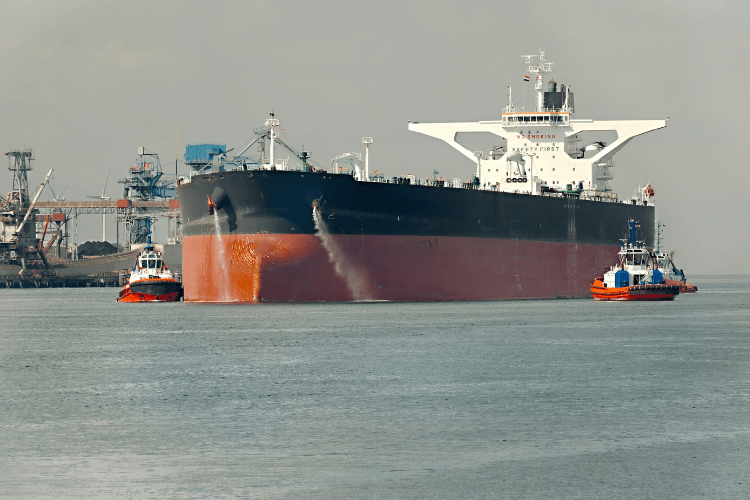
For tanker operators, disruption is frequently a revenue event.

When conventional shipping routes are blocked, two things happen simultaneously. Voyages get longer as ships reroute, and freight rates spike as shippers bid aggressively for available capacity.

Insurance costs compound the effect further. With war risk premiums on vessels transiting conflict-adjacent zones adding hundreds of thousands of dollars to a single voyage, costs will then get passed on to customers or absorbed as margin expansion.

And History validates this pattern in stark terms too. Very Large Crude Carrier (VLCC) rates rose over 40% at the outset of the first Gulf War. During the second Gulf War, the increase was even more dramatic, rates surging to as much as 304%.

In response, analysts have responded by raising price targets on a cluster of tanker stocks: Ardmore Shipping Corporation, DHT Holdings, Frontline, Scorpio Tankers, and TORM plc.

There is, however, a critical caveat that any shift toward diplomatic resolution could cool rate momentum rapidly, forcing these companies to give back gains built on fear and uncertainty rather than structural demand growth. Tanker trades in geopolitical environments are not set-and-forget positions.
The Losers: Luxury Goods Conglomerates

If tanker operators are the unlikely beneficiaries of today’s crisis, luxury goods companies represent its clearest victims.

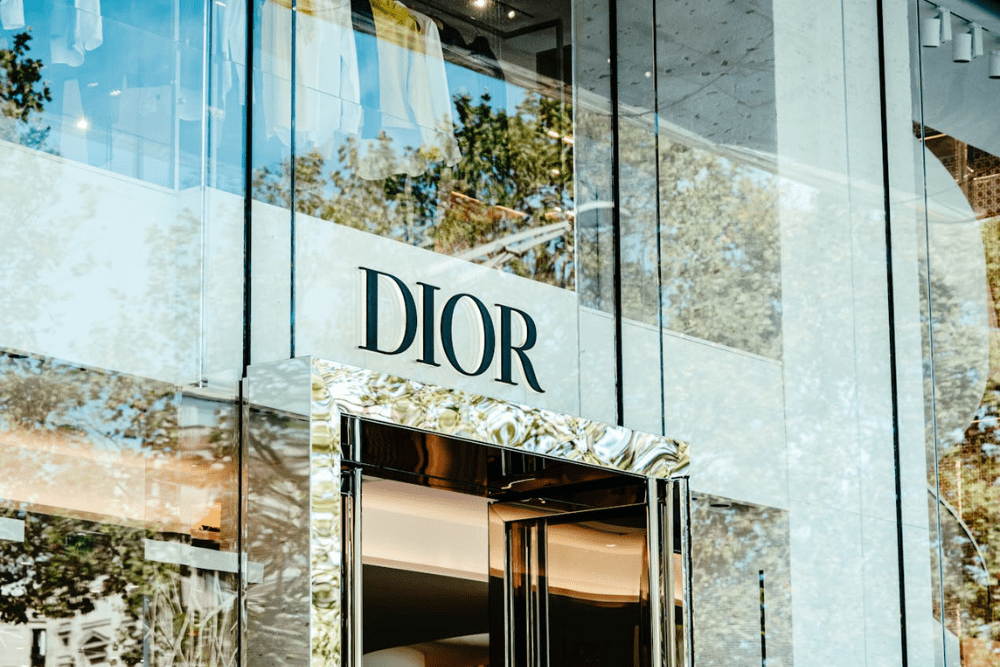
The Middle East currently serves as a vital hub for the luxury market. Consumers in Gulf states make up a significant portion of global sales for high-end watches, jewellery, leather goods, and fashion.

Recent crises, however, have introduced a wave of instability. This uncertainty often weakens consumer confidence and leads to a decline in the discretionary spending that luxury brands rely on for growth. Furthermore, this downturn comes at a difficult time, as the industry is already struggling with a slowdown in China.

The world’s largest luxury market has been struggling to return to meaningful growth, with major European luxury houses watching their Chinese sales stagnate or decline. The Middle East disruption doesn’t need to be severe on its own; it only needs to apply additional pressure to an already fragile demand picture.

Bernstein analyst Luca Solca puts it plainly, “If people don’t go back to normal, and we have more issues when it comes to sourcing oil and gas from the Gulf, then the probability of a recession globally could be increasing, and that would definitely dampen discretionary sectors like luxury.”

And the numbers tell the story. Shares of LVMH fell 2.82%, Kering dropped 6.81%, Burberry declined 2.14%, and Richemont (owner of Cartier) slid 2.84%.

Despite the falling shares mentioned, not everyone agrees that these declines reflect lasting fundamental damage. Morningstar analyst Jelena Sokolova is keeping fair value estimates unchanged across the sector, arguing that the luxury majors’ direct revenue exposure to the Middle East is limited in aggregate and the disruption is more likely temporary than structural. If the Strait reopens quickly, beaten-down luxury stocks could recover fast, presenting a buying opportunity for investors with a longer time horizon.

The counterargument is that “temporary” is doing a lot of heavy lifting. Geopolitical conflicts involving Iran have a documented tendency to extend longer than initial optimism suggests, and each additional week increases the probability that demand damage becomes real rather than theoretical.

The Bottom Line

The current market dynamic is a textbook illustration of how investors respond to geopolitical shocks. Not with uniform fear, but with rapid, differentiated repositioning based on the first and second-order effects of the crisis.

It is predicted that the longer this conflict persists, the more broadly the economic strain spreads. At some point, companies benefiting from disruption find themselves dragged down by the same recessionary gravity already hitting discretionary names. Today’s winners are not immune to the macro, they are simply upstream of it, for now.

For investors, the message is clear. To watch the conflict closely, trade the rotation actively, and don’t mistake a near-term thematic tailwind for a long-term structural position. In geopolitically driven markets, the most important questions are often the simplest:

How long will this last, and what happens when it ends?

When geopolitical crises erupt, conventional wisdom says markets panic uniformly, with investors fleeing risk assets and taking shelter in gold and treasuries. However, escalating tensions in the Middle East are rewriting that script. Rather than a broad selloff, the latest developments are producing something more nuanced: a sharp rotation where some sectors surge while others bleed.

The flashpoint is the Strait of Hormuz. Iran has moved to close this critical waterway, through which an estimated quarter of global crude oil and LNG shipments pass daily. The closure sends ripple effects across every industry with exposure to global trade, oil prices, or consumer confidence.

What’s emerging is extreme bifurcation. On one side, shipping and tanker companies are roaring to life as disruption makes their assets indispensable. On the other hand, luxury goods conglomerates are caught between a weakened Middle East consumer and a China that was already struggling to recover.

The Winners: Shipping & Tanker Companies

For tanker operators, disruption is frequently a revenue event.

When conventional shipping routes are blocked, two things happen simultaneously. Voyages get longer as ships reroute, and freight rates spike as shippers bid aggressively for available capacity.

Insurance costs compound the effect further. With war risk premiums on vessels transiting conflict-adjacent zones adding hundreds of thousands of dollars to a single voyage, costs will then get passed on to customers or absorbed as margin expansion.

And History validates this pattern in stark terms too. Very Large Crude Carrier (VLCC) rates rose over 40% at the outset of the first Gulf War. During the second Gulf War, the increase was even more dramatic, rates surging to as much as 304%.

In response, analysts have responded by raising price targets on a cluster of tanker stocks: Ardmore Shipping Corporation, DHT Holdings, Frontline, Scorpio Tankers, and TORM plc.

There is, however, a critical caveat that any shift toward diplomatic resolution could cool rate momentum rapidly, forcing these companies to give back gains built on fear and uncertainty rather than structural demand growth. Tanker trades in geopolitical environments are not set-and-forget positions.

The Losers: Luxury Goods Conglomerates

If tanker operators are the unlikely beneficiaries of today’s crisis, luxury goods companies represent its clearest victims.

The Middle East currently serves as a vital hub for the luxury market. Consumers in Gulf states make up a significant portion of global sales for high-end watches, jewellery, leather goods, and fashion.

Recent crises, however, have introduced a wave of instability. This uncertainty often weakens consumer confidence and leads to a decline in the discretionary spending that luxury brands rely on for growth. Furthermore, this downturn comes at a difficult time, as the industry is already struggling with a slowdown in China.

The world’s largest luxury market has been struggling to return to meaningful growth, with major European luxury houses watching their Chinese sales stagnate or decline. The Middle East disruption doesn’t need to be severe on its own; it only needs to apply additional pressure to an already fragile demand picture.

Bernstein analyst Luca Solca puts it plainly, “If people don’t go back to normal, and we have more issues when it comes to sourcing oil and gas from the Gulf, then the probability of a recession globally could be increasing, and that would definitely dampen discretionary sectors like luxury.”

And the numbers tell the story. Shares of LVMH fell 2.82%, Kering dropped 6.81%, Burberry declined 2.14%, and Richemont (owner of Cartier) slid 2.84%.

Despite the falling shares mentioned, not everyone agrees that these declines reflect lasting fundamental damage. Morningstar analyst Jelena Sokolova is keeping fair value estimates unchanged across the sector, arguing that the luxury majors’ direct revenue exposure to the Middle East is limited in aggregate and the disruption is more likely temporary than structural. If the Strait reopens quickly, beaten-down luxury stocks could recover fast, presenting a buying opportunity for investors with a longer time horizon.

The counterargument is that “temporary” is doing a lot of heavy lifting. Geopolitical conflicts involving Iran have a documented tendency to extend longer than initial optimism suggests, and each additional week increases the probability that demand damage becomes real rather than theoretical.

The Bottom Line

The current market dynamic is a textbook illustration of how investors respond to geopolitical shocks. Not with uniform fear, but with rapid, differentiated repositioning based on the first and second-order effects of the crisis.

It is predicted that the longer this conflict persists, the more broadly the economic strain spreads. At some point, companies benefiting from disruption find themselves dragged down by the same recessionary gravity already hitting discretionary names. Today’s winners are not immune to the macro, they are simply upstream of it, for now.

For investors, the message is clear. To watch the conflict closely, trade the rotation actively, and don’t mistake a near-term thematic tailwind for a long-term structural position. In geopolitically driven markets, the most important questions are often the simplest:

How long will this last, and what happens when it ends?