
Why Markets Overlook Silver’s Utility

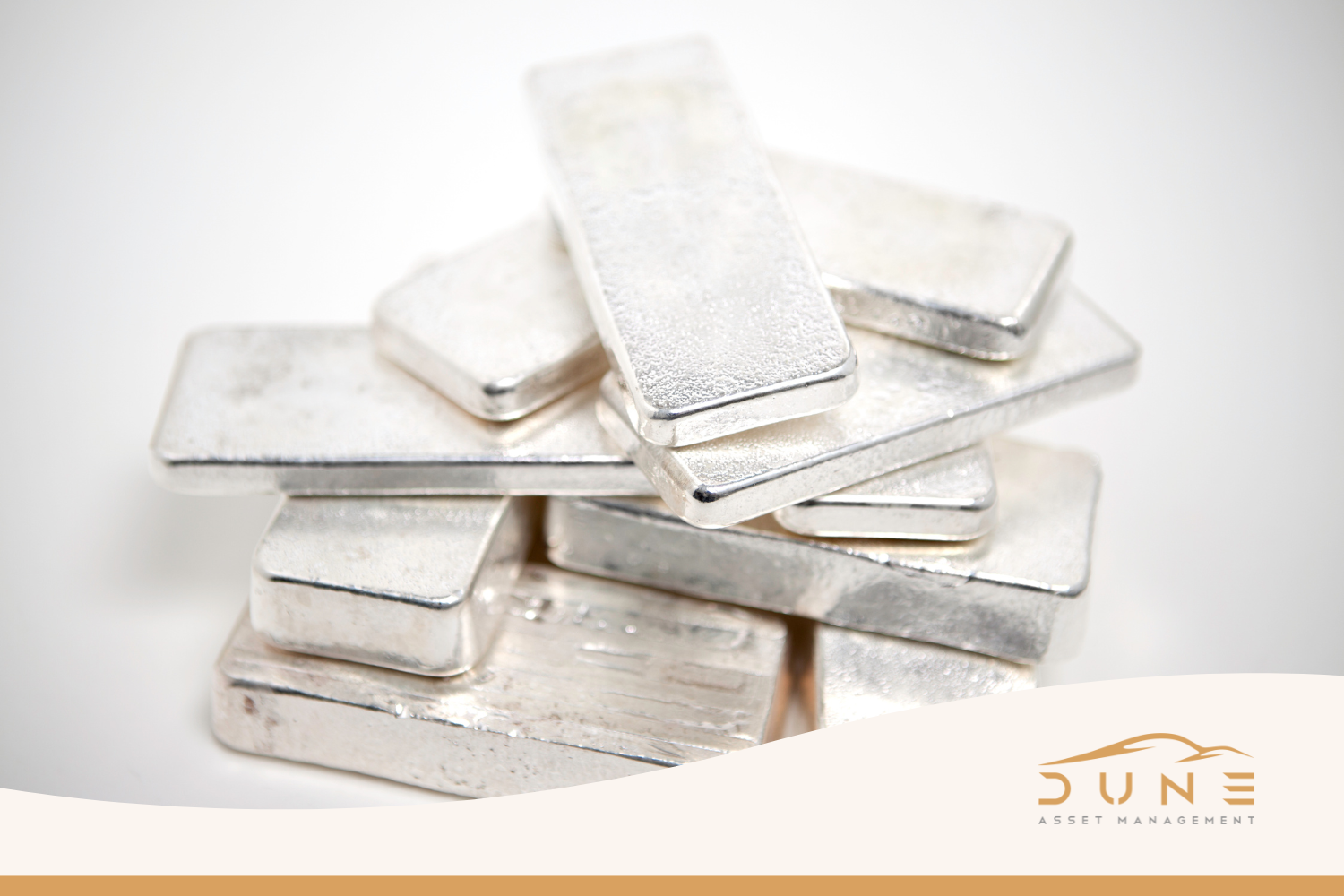
Image showing a stack of silver ingots

Silver has officially graduated from its role as gold’s ignored sidekick; it is now the asset gleefully pointing out exactly where markets have been caught napping. While it might masquerade as a standard commodity rally, we are actually witnessing a high-stakes repricing of scarcity, energy transition risks, and monetary debasement. All these modern anxieties are colliding on a single “old” metal that has suddenly found its second youth.

For years, silver was merely gold’s high-strung shadow. It was useful for traders looking for a cheap thrill, but it remained far too volatile for any “serious” allocator to invite to dinner. That mental model is now breaking down, and deservedly so. The decade‑long cap below 30 USD/oz was never about abundant supply; it was about complacency, a market unwilling to assign value to structural demand from solar, EVs and power electronics because those stories felt “too long term” for quarterly P&Ls.

The current breakout is not some irrational overshoot; it is the bill coming due for years of under‑investment and wilful disregard of how central silver is to the real economy’s wiring. In that sense, the move above prior ceilings is less a bubble and more a belated admission that the old equilibrium price was wrong.

“Structural tightness is the feature, not the bug”

Much commentary still talks about “deficits” as if they are temporary, cyclical glitches to be arbitraged away. That misses the point. When roughly 70% of global output comes as a byproduct of other metals, and when permitting, ESG scrutiny and geology all push against rapid mine expansion, the silver market is structurally incapable of flexing supply to meet the kind of demand now baked into energy policy.

Investors should stop imagining an invisible hand that will conjure new ounces on command. In a world obsessed with software and balance‑sheet light business models, the blunt reality of ore grades, capex and timelines is reasserting itself, and silver is one of the clearest places where that reality is priced in.

There is also a deeper irony: many investors still talk about solar and EV demand as if it were an overlay on “normal” industrial demand, rather than the new base case. When photovoltaics alone consume hundreds of millions of ounces a year, and when grid modernisation and electrification are policy priorities across major economies, this is not speculative, marginal use; it is core system infrastructure.

In that light, the idea that silver should trade as a sleepy, range‑bound metal starts to look absurd. Markets are finally waking up to the fact that you cannot decarbonise, electrify and digitise at scale without securing the materials that make it physically possible, and silver sits near the top of that list.

Silver as a monetary reality check

The monetary angle only sharpens the case. In an era of elevated fiscal deficits, contentious politics and renewed interventionism that is embodied in shifting trade regimes and tariff threats, investors are searching for assets that cannot be printed. Gold naturally benefits, but silver offers something more dangerous to the status quo: a monetary asset whose price is also a barometer of physical scarcity in the real economy.

That is why silver’s outperformance versus gold and equities this year matters. It is not just a high‑beta trade; it is a signal that the market is starting to reward assets that sit at the intersection of hard‑asset security and industrial indispensability.

Even after a powerful rally, the case can be made that silver is still in the early stages of its re‑rating. The gold‑silver ratio remains stretched relative to history, inventories have not rebuilt in any meaningful way, and the pipeline of new supply looks thin compared with the policy‑driven demand path. Yet portfolio allocations to silver remain tiny relative to the scale of global savings and the trillions being directed toward energy and infrastructure over the coming decade.

The uncomfortable conclusion is that the “rising trajectory of silver” is not an anomaly for mean‑reversion to clean up; it is a repricing of a world that has quietly changed under investors’ feet. Those who continue to view silver through the old, narrow lens of “poor man’s gold” risk discovering that the real poverty lies not in the metal, but in the outdated frameworks guiding their capital.

Silver has officially graduated from its role as gold’s ignored sidekick; it is now the asset gleefully pointing out exactly where markets have been caught napping. While it might masquerade as a standard commodity rally, we are actually witnessing a high-stakes repricing of scarcity, energy transition risks, and monetary debasement. All these modern anxieties are colliding on a single “old” metal that has suddenly found its second youth.

For years, silver was merely gold’s high-strung shadow. It was useful for traders looking for a cheap thrill, but it remained far too volatile for any “serious” allocator to invite to dinner. That mental model is now breaking down, and deservedly so. The decade‑long cap below 30 USD/oz was never about abundant supply; it was about complacency, a market unwilling to assign value to structural demand from solar, EVs and power electronics because those stories felt “too long term” for quarterly P&Ls.

The current breakout is not some irrational overshoot; it is the bill coming due for years of under‑investment and wilful disregard of how central silver is to the real economy’s wiring. In that sense, the move above prior ceilings is less a bubble and more a belated admission that the old equilibrium price was wrong.

“Structural tightness is the feature, not the bug”

Much commentary still talks about “deficits” as if they are temporary, cyclical glitches to be arbitraged away. That misses the point. When roughly 70% of global output comes as a byproduct of other metals, and when permitting, ESG scrutiny and geology all push against rapid mine expansion, the silver market is structurally incapable of flexing supply to meet the kind of demand now baked into energy policy.

Investors should stop imagining an invisible hand that will conjure new ounces on command. In a world obsessed with software and balance‑sheet light business models, the blunt reality of ore grades, capex and timelines is reasserting itself, and silver is one of the clearest places where that reality is priced in.

There is also a deeper irony: many investors still talk about solar and EV demand as if it were an overlay on “normal” industrial demand, rather than the new base case. When photovoltaics alone consume hundreds of millions of ounces a year, and when grid modernisation and electrification are policy priorities across major economies, this is not speculative, marginal use; it is core system infrastructure.

In that light, the idea that silver should trade as a sleepy, range‑bound metal starts to look absurd. Markets are finally waking up to the fact that you cannot decarbonise, electrify and digitise at scale without securing the materials that make it physically possible, and silver sits near the top of that list.

Silver as a monetary reality check

The monetary angle only sharpens the case. In an era of elevated fiscal deficits, contentious politics and renewed interventionism that is embodied in shifting trade regimes and tariff threats, investors are searching for assets that cannot be printed. Gold naturally benefits, but silver offers something more dangerous to the status quo: a monetary asset whose price is also a barometer of physical scarcity in the real economy.

That is why silver’s outperformance versus gold and equities this year matters. It is not just a high‑beta trade; it is a signal that the market is starting to reward assets that sit at the intersection of hard‑asset security and industrial indispensability.

Even after a powerful rally, the case can be made that silver is still in the early stages of its re‑rating. The gold‑silver ratio remains stretched relative to history, inventories have not rebuilt in any meaningful way, and the pipeline of new supply looks thin compared with the policy‑driven demand path. Yet portfolio allocations to silver remain tiny relative to the scale of global savings and the trillions being directed toward energy and infrastructure over the coming decade.

The uncomfortable conclusion is that the “rising trajectory of silver” is not an anomaly for mean‑reversion to clean up; it is a repricing of a world that has quietly changed under investors’ feet. Those who continue to view silver through the old, narrow lens of “poor man’s gold” risk discovering that the real poverty lies not in the metal, but in the outdated frameworks guiding their capital.