
Aventurarse A America Latina

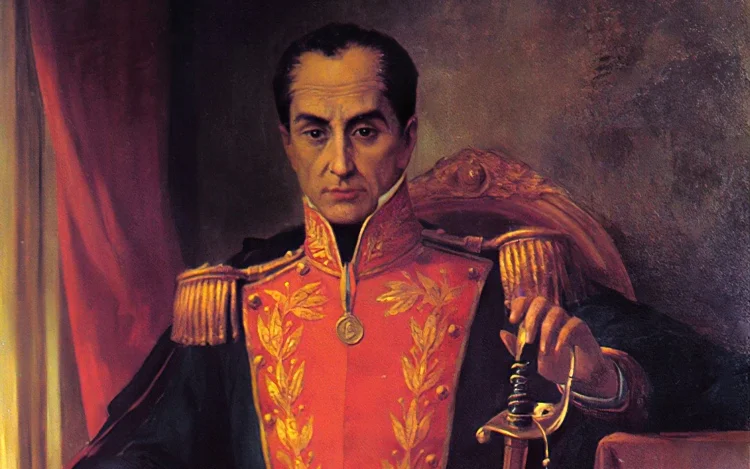
The Nobel Laureate Colombian novelist Gabriel García Márquez writes in ‘The General in His Labyrinth’:

“Today, under equal circumstances, my voice would not tremble to give the same order, nor would Europeans have the moral authority to censure me, because if there is a history watered with blood, indignity, injustices, it is the history of Europe. (…) So do us a favor and don’t tell us what we should do anymore. Don’t try to teach us how we should be, don’t try to make us like you, don’t expect us to do well in twenty years what you did so badly in two thousand.”

The people of Latin America love their freedom and their way of life, having thrown off the yokes of Iberian colonial oppression centuries ago. Since then, their self-confidence and self-determination carries through to their commerce and projection on the global stage. 

Despite disappointing investors in earlier centuries, they have now started to catch the attention of many – with a vibrant and relatively youthful demographic profile (~20% of a whopping 671 million population are between 15 and 24 years old) that contrasts starkly with the developed world where ageing trends are accelerating.

Their large agriculture industry builds upon a strong foundation of water supplies. In fact, the UN estimates that South America has the lowest risk when it comes to water scarcity (unlike California state, China, India) – at some point, this will be valued by global policymakers and recognised by the investment community.

Also from a global standpoint, not all Africans and Latin Americans will want (or at least appear) to take a side in the new Great Game between the Americans and the Chinese, and most will resort to appeasing both sides while focusing on domestic and their regional neighbours in this new geopolitical situation. The recent visit by Brazil’s President Lula da Silva to Beijing and his meeting with US President Biden in Washington D.C. is an example of the proactiveness that we expect from Latin American leaders in this new geopolitical climate.
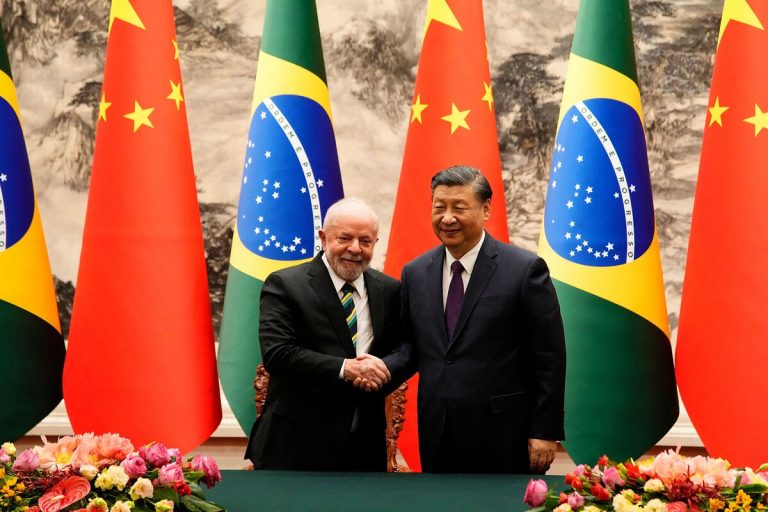
 

Brazil’s President da Silva with Chinese President Xi. Source: Bloomberg

Focusing on the current business cycle – as many countries struggle to rein in inflation, Latin American countries have led in the fight by biting the bullet early on compared to the US and Europe. Interest rates were rapidly raised by a huge amount in 2022 to bring about disinflation, and in places like Brazil, real (inflation-adjusted) interest rates are some of the highest in the world. Its currency (the Mexican Peso) has also continuously strengthened against the US Dollar despite a Fed rate hike cycle – which is rare for an emerging market and a sign that things are happening there.

Undoubtedly, economic slowdowns are taking place across the continent, but this sets the stage for exciting investment opportunities to emerge once the cycle eventually turns. Wrapped up with all this is the long-term case of a broad and gradual depreciation of the US Dollar as capital seeks out cheaper asset markets. As a boom in emerging markets ensues with a weaker greenback, Latin America stands to benefit from a virtuous cycle of improved liquidity conditions and global trade.

There are certainly risks out there and we have to be shrewd, but It’s difficult not to get excited about Latin America looking ahead. As Gabriel García Márquez hoped for and dreamt about, perhaps this century will be the one where Latin Americans can finally be more assertive on the world stage and shine.


The Nobel Laureate Colombian novelist Gabriel García Márquez writes in ‘The General in His Labyrinth’:

“Today, under equal circumstances, my voice would not tremble to give the same order, nor would Europeans have the moral authority to censure me, because if there is a history watered with blood, indignity, injustices, it is the history of Europe. (…) So do us a favor and don’t tell us what we should do anymore. Don’t try to teach us how we should be, don’t try to make us like you, don’t expect us to do well in twenty years what you did so badly in two thousand.”

The people of Latin America love their freedom and their way of life, having thrown off the yokes of Iberian colonial oppression centuries ago. Since then, their self-confidence and self-determination carries through to their commerce and projection on the global stage. 

Despite disappointing investors in earlier centuries, they have now started to catch the attention of many – with a vibrant and relatively youthful demographic profile (~20% of a whopping 671 million population are between 15 and 24 years old) that contrasts starkly with the developed world where ageing trends are accelerating.

Their large agriculture industry builds upon a strong foundation of water supplies. In fact, the UN estimates that South America has the lowest risk when it comes to water scarcity (unlike California state, China, India) – at some point, this will be valued by global policymakers and recognised by the investment community.

Also from a global standpoint, not all Africans and Latin Americans will want (or at least appear) to take a side in the new Great Game between the Americans and the Chinese, and most will resort to appeasing both sides while focusing on domestic and their regional neighbours in this new geopolitical situation. The recent visit by Brazil’s President Lula da Silva to Beijing and his meeting with US President Biden in Washington D.C. is an example of the proactiveness that we expect from Latin American leaders in this new geopolitical climate.


Brazil’s President da Silva with Chinese President Xi. Source: Bloomberg

Focusing on the current business cycle – as many countries struggle to rein in inflation, Latin American countries have led in the fight by biting the bullet early on compared to the US and Europe. Interest rates were rapidly raised by a huge amount in 2022 to bring about disinflation, and in places like Brazil, real (inflation-adjusted) interest rates are some of the highest in the world. Its currency (the Mexican Peso) has also continuously strengthened against the US Dollar despite a Fed rate hike cycle – which is rare for an emerging market and a sign that things are happening there.

Undoubtedly, economic slowdowns are taking place across the continent, but this sets the stage for exciting investment opportunities to emerge once the cycle eventually turns. Wrapped up with all this is the long-term case of a broad and gradual depreciation of the US Dollar as capital seeks out cheaper asset markets. As a boom in emerging markets ensues with a weaker greenback, Latin America stands to benefit from a virtuous cycle of improved liquidity conditions and global trade.

There are certainly risks out there and we have to be shrewd, but It’s difficult not to get excited about Latin America looking ahead. As Gabriel García Márquez hoped for and dreamt about, perhaps this century will be the one where Latin Americans can finally be more assertive on the world stage and shine.