

Surviving the 2023 RIP

Nasdaq 2023 retraced 61.8% – 78.6%
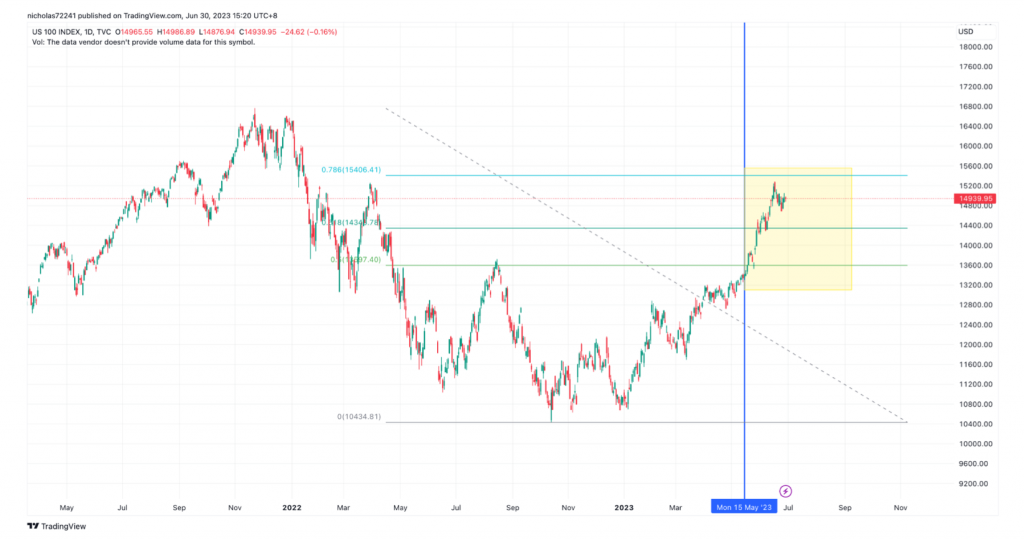
We managed to hedge the aggressive blow-off top highlighted in yellow, sparing us from much pain as we ran one of the most painful books in the fund management world: Long Energy & Commods vs Short Tech. Ending the month of June relatively unscathed is not the most ideal on a comparative basis vs the S&P500 or Nasdaq (they are being pulled up only by the magnificent 7), but a real relief based on our portfolio composition. This is where I got the metaphorical impression of surviving the RIP to barrel-roll into position because this level of retracement (61.8% to 78.6%) is where most bear-market rallies fizzle out, giving us a good chance to take off our blow-off top hedges and allow our shorts to take a stab. The following two charts (200 GFC & 2001 Tech Bubble) also show bear-market rallies fizzling at the proverbial 61.8% to 78.6% retracement levels, giving us some historical contexts of similar market structures.

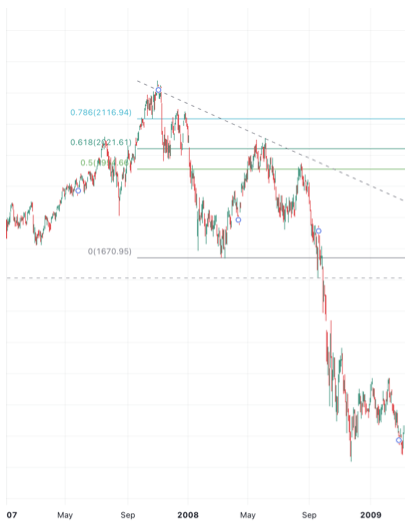
2008 GFC, retraced 61.8% – 78.6% before rolling over
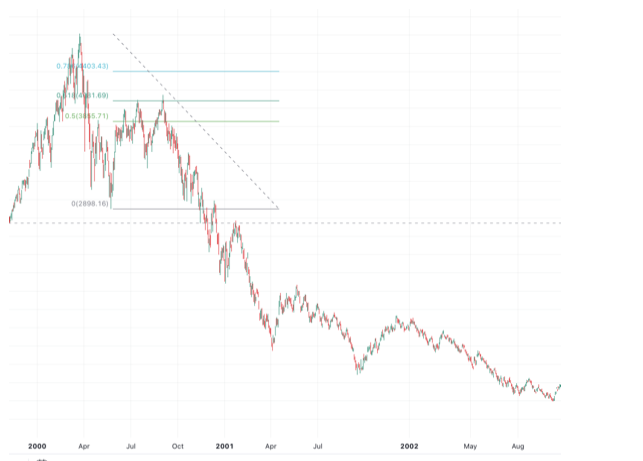
2001 Tech Bubble, retraced 61.8% – 78.6% before rolling over
2001 Tech Bubble, retraced 61.8% - 78.6% before rolling over

In addition, apart from historical contexts of 2008 and 2001, current market structure also suggests that the market is working hard against fundamental and liquidity gravity.

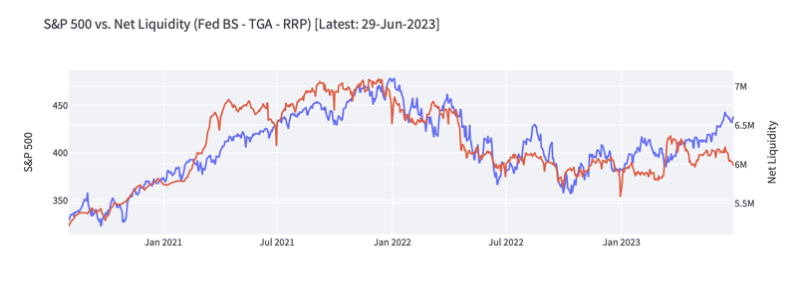
S&P500 (line in blue) is running ahead of liquidity conditions (line in red) 
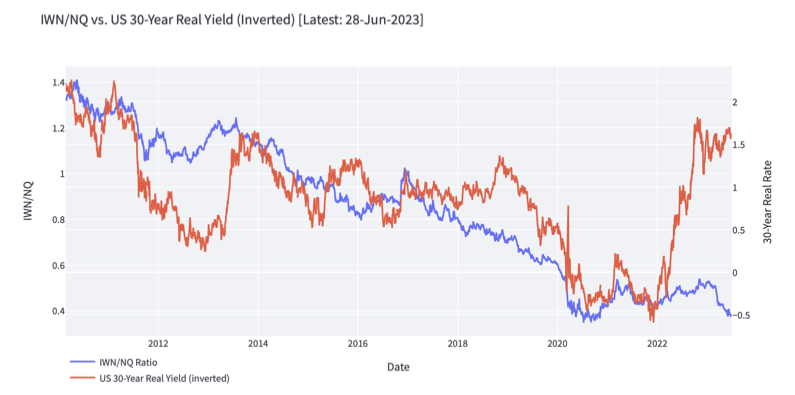
Value/Tech (line in blue) is trading at extreme divergence vs inverted 30yr Rates (line in red)
Cognitive Dissonance.

One of the hardest things to do is to hold divergent views concurrently, and there is a good non-zero probability that markets can continue to rip higher as we are not at sentiment highs and private sector liquidity conditions are somewhat opaque and hard to judge based on lags in economic transmission. In addition, liquidity and risk-seeking these days are much less permeable due to geopolitical factions and divergent economic data in different regions (Eurozone & UK —> Weak economic data vs USA & LatAM —> Strong economic data etc.). The flow of funds appears to be patchy, and this is also a crucial phenomenon to be aware of; for example, banks have been losing a lot of deposits to money market funds (reason for SVB, First Republic collapse); hence money market funds ensuing flow is the elephant in the room that we must address. I believe that a faction of Cash & Money Market Fund campers have been flowing from their former holdings to chase the AI Narrative, leading to the essential question of whether the osmosis will continue in this direction. Because sentiment is not yet at “extremes”, the flood gates from money market funds & cash are not fully open, and the opacity of pockets of liquidity due to aggressive fiscal policy, there may be surprises in price trends even though fundamentals do not make sense. As much as we draw corollaries to 2008, 2001 and previous crises, the current Debt/GDP and the fiscal and global order is rather unprecedented; thus, it will be prudent to tread lightly on any tautological economic thesis and rely more on the fallibility of human emotions that is greed and fear which manifests itself in market sentiments.

Predicting flows to establish fundamentally strong investments.
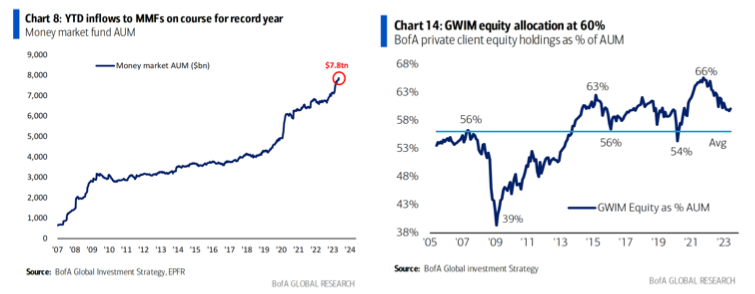
The ensuing flow from Money Market Funds and Cash will determine where the next bull market will emerge, and bull markets usually emerge silently at the fringes. There is still a lot of liquidity sloshing around, with more to come as empires collapse (Macron is the modern-day emperor Nero – watching an Elton John concert as Paris burned) and fiscal dominance (expansive monetary policy is usually enacted to prop up the vestiges of a receding power) in the Western world takes over. The inflation tsunami is on the horizon, but markets are looking at the 5ft waves crashing ashore, as Druckemiller puts it, and when markets realise that MMFs and Cash holdings are certificates of confiscation, the floodgates will open as bagholders rush for the exits. Dogma suggests that the beneficiaries of such an environment will be hard assets and commodities, and we are confident that will not change, but we must also concurrently entertain the possibility that Artificial Intelligence has entered a secular new paradigm that makes specific components and layers of Tech a necessary new age commodity to keep this civilisation going. We are talking about Network Infrastructure, Security, Chips and everything in between; however, shunning away from companies that depend on cyclical excesses due to easy monetary policies like Snapchat and Pinterest.

Value is a derivative of perception, and we must understand that perception changes across time and society’s base level of technological advancement. We must also bear in mind that the anchor for value is base-level demand, and the main cornerstone of what something is worth is the “necessity” of a particular good or service. Hence Necessity> Based-Level Demand > Cost > Perception > Value. This is not about getting into the semantics of what something means but not being siloed by what dogma references to what a “commodity” is. We are keeping this in mind as we wait for flow dislocations in the market to snap up good-value compounders for times ahead.

Nasdaq 2023 retraced 61.8% – 78.6%

We managed to hedge the aggressive blow-off top highlighted in yellow, sparing us from much pain as we ran one of the most painful books in the fund management world: Long Energy & Commods vs Short Tech. Ending the month of June relatively unscathed is not the most ideal on a comparative basis vs the S&P500 or Nasdaq (they are being pulled up only by the magnificent 7), but a real relief based on our portfolio composition. This is where I got the metaphorical impression of surviving the RIP to barrel-roll into position because this level of retracement (61.8% to 78.6%) is where most bear-market rallies fizzle out, giving us a good chance to take off our blow-off top hedges and allow our shorts to take a stab. The following two charts (200 GFC & 2001 Tech Bubble) also show bear-market rallies fizzling at the proverbial 61.8% to 78.6% retracement levels, giving us some historical contexts of similar market structures.

2008 GFC, retraced 61.8% – 78.6% before rolling over

2001 Tech Bubble, retraced 61.8% – 78.6% before rolling over

2001 Tech Bubble, retraced 61.8% - 78.6% before rolling over

In addition, apart from historical contexts of 2008 and 2001, current market structure also suggests that the market is working hard against fundamental and liquidity gravity.

S&P500 (line in blue) is running ahead of liquidity conditions (line in red) 

Value/Tech (line in blue) is trading at extreme divergence vs inverted 30yr Rates (line in red)

Cognitive Dissonance.

One of the hardest things to do is to hold divergent views concurrently, and there is a good non-zero probability that markets can continue to rip higher as we are not at sentiment highs and private sector liquidity conditions are somewhat opaque and hard to judge based on lags in economic transmission. In addition, liquidity and risk-seeking these days are much less permeable due to geopolitical factions and divergent economic data in different regions (Eurozone & UK —> Weak economic data vs USA & LatAM —> Strong economic data etc.). The flow of funds appears to be patchy, and this is also a crucial phenomenon to be aware of; for example, banks have been losing a lot of deposits to money market funds (reason for SVB, First Republic collapse); hence money market funds ensuing flow is the elephant in the room that we must address. I believe that a faction of Cash & Money Market Fund campers have been flowing from their former holdings to chase the AI Narrative, leading to the essential question of whether the osmosis will continue in this direction. Because sentiment is not yet at “extremes”, the flood gates from money market funds & cash are not fully open, and the opacity of pockets of liquidity due to aggressive fiscal policy, there may be surprises in price trends even though fundamentals do not make sense. As much as we draw corollaries to 2008, 2001 and previous crises, the current Debt/GDP and the fiscal and global order is rather unprecedented; thus, it will be prudent to tread lightly on any tautological economic thesis and rely more on the fallibility of human emotions that is greed and fear which manifests itself in market sentiments.

Predicting flows to establish fundamentally strong investments.

The ensuing flow from Money Market Funds and Cash will determine where the next bull market will emerge, and bull markets usually emerge silently at the fringes. There is still a lot of liquidity sloshing around, with more to come as empires collapse (Macron is the modern-day emperor Nero – watching an Elton John concert as Paris burned) and fiscal dominance (expansive monetary policy is usually enacted to prop up the vestiges of a receding power) in the Western world takes over. The inflation tsunami is on the horizon, but markets are looking at the 5ft waves crashing ashore, as Druckemiller puts it, and when markets realise that MMFs and Cash holdings are certificates of confiscation, the floodgates will open as bagholders rush for the exits. Dogma suggests that the beneficiaries of such an environment will be hard assets and commodities, and we are confident that will not change, but we must also concurrently entertain the possibility that Artificial Intelligence has entered a secular new paradigm that makes specific components and layers of Tech a necessary new age commodity to keep this civilisation going. We are talking about Network Infrastructure, Security, Chips and everything in between; however, shunning away from companies that depend on cyclical excesses due to easy monetary policies like Snapchat and Pinterest.

Value is a derivative of perception, and we must understand that perception changes across time and society’s base level of technological advancement. We must also bear in mind that the anchor for value is base-level demand, and the main cornerstone of what something is worth is the “necessity” of a particular good or service. Hence Necessity> Based-Level Demand > Cost > Perception > Value. This is not about getting into the semantics of what something means but not being siloed by what dogma references to what a “commodity” is. We are keeping this in mind as we wait for flow dislocations in the market to snap up good-value compounders for times ahead.